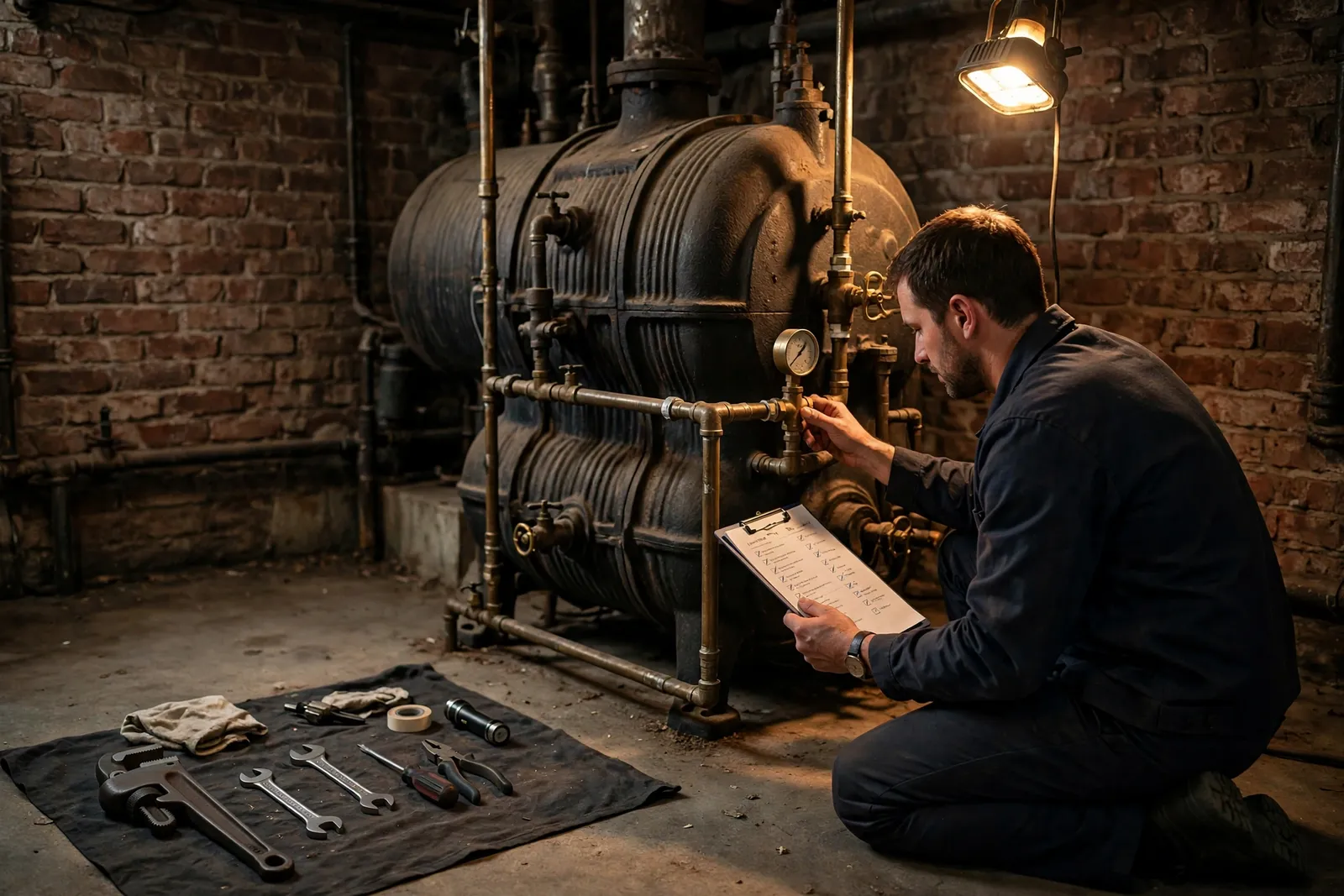
Newark boilers work hard. A cast iron boiler in a Forest Hill colonial or a two family in the Ironbound may run from October to April with barely a pause, heating radiators that are older than the people living with them. Most years it does the job without complaint. That quiet reliability is exactly why the yearly service gets skipped, and why small faults get a whole heating season to grow.
A yearly service is not a quick look. Boilers have no filter to swap. It is a set of checks that covers safety first, then combustion, then the water side, then the controls, ending with a full cycle test. This blog walks through each part, so you know what to expect and how to tell the work was done properly.
Why a Yearly Service Matters More Than a Quick Look
A boiler gives few warnings before a fault becomes a no heat call. A relief valve that weeps a little in October can stick by January. An expansion tank that lost its air charge over summer pushes pressure up with every cycle until the relief valve opens. A burner that is slowly sooting up wastes fuel for months before anyone notices the radiators taking longer to warm. The yearly visit exists to catch those slow changes while they are still small.
Newark housing makes the visit matter more, not less. The city has a deep stock of older boilers: steam systems in brownstones, hot water loops in postwar two family homes, and condensing units in newer rehabs. Each type has its own wear points, and hard water adds scale to all of them. Our post on how Newark hard water shortens boiler life explains what scale does inside a heat exchanger. A service scheduled before heating season, in early fall, catches problems while there is still time to fix them calmly. The fall boiler maintenance checklist is a good companion read for what you can check yourself between visits.
Safety Controls First: What Gets Tested
Safety controls are the non negotiable part of the visit, and a good technician starts here. The relief valve gets tested to confirm it opens at its rated pressure and reseats cleanly. The low water cutoff gets tested to confirm it shuts the burner down when the water level drops, because a boiler firing with low water is the most dangerous failure in the system. The flame safeguard gets checked to confirm it cuts the gas if the flame goes out. On gas units, the technician checks for gas leaks at the valve train and confirms the venting draws properly.
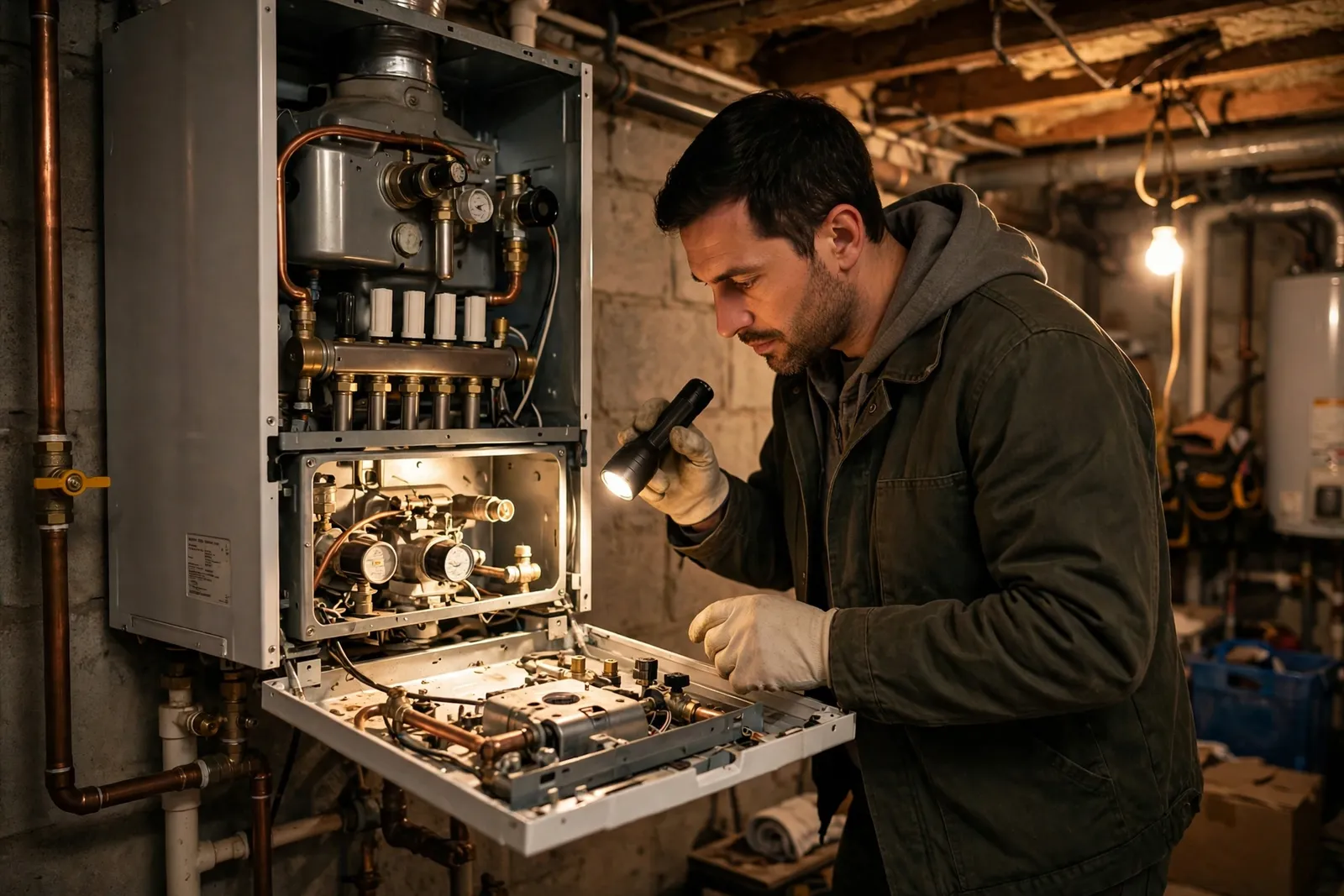
Carbon monoxide gets attention too. The technician checks the flue and draft, and uses a combustion analyzer to read what is leaving the boiler. A rising carbon monoxide reading or a lazy draft points to a venting or combustion problem that needs fixing before the heating season gets serious. If any safety control fails its test, the boiler should not run until it is fixed. That is the point of an annual boiler safety inspection: the safety tests are the service, not an extra.
Burners and the Heat Exchanger
With safety confirmed, the burner comes next. The technician cleans the burner assembly, checks the flame pattern, and looks for soot, rust flakes, or delayed ignition. A clean gas flame burns steady and blue. A lazy yellow flame or flame that rolls out on ignition points to dirt, a gas pressure issue, or a venting problem. The ignition parts get checked too: a pilot that keeps going out will strand you on the coldest night, which is why pilot light problems get attention during a service rather than after a failure.
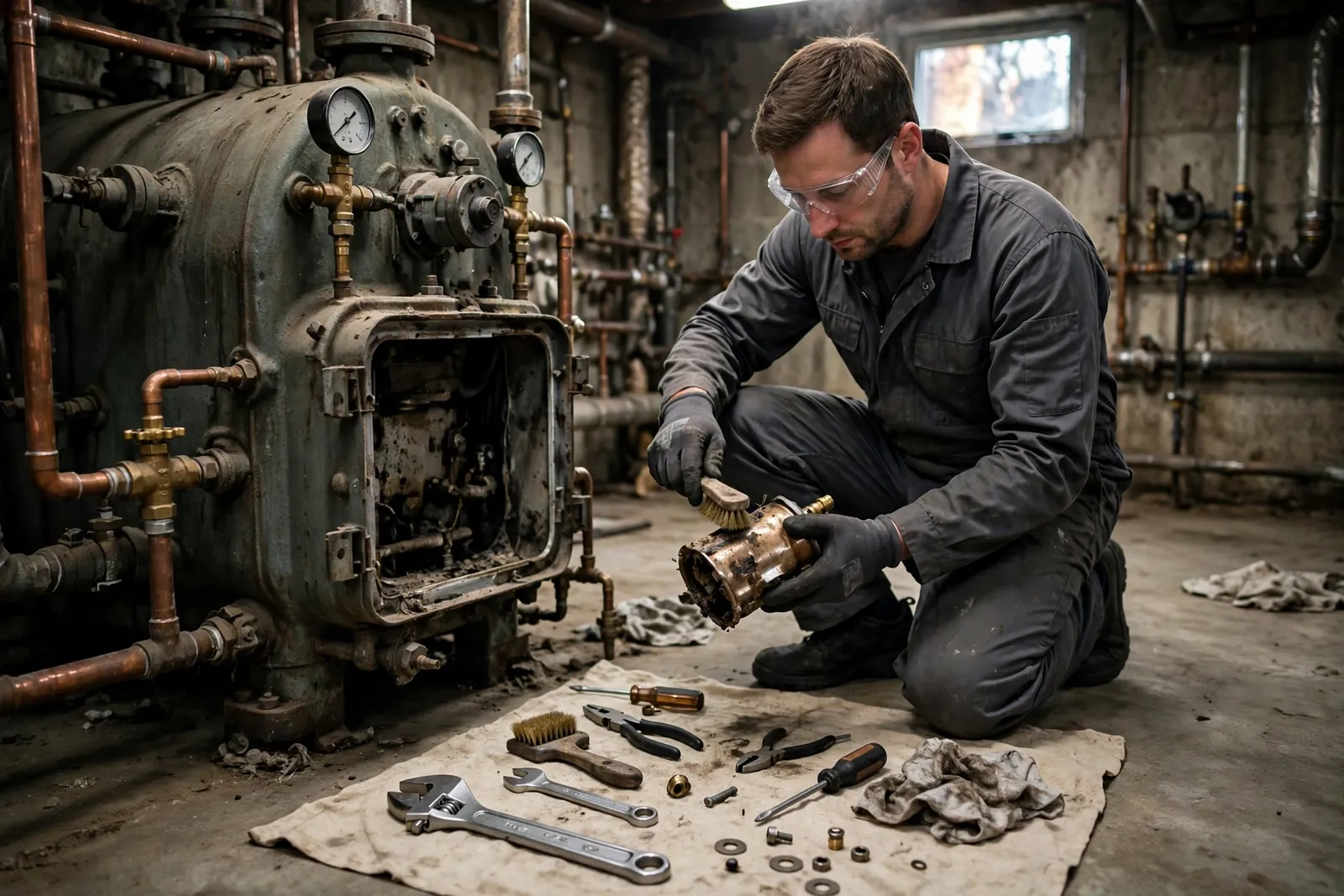
The heat exchanger gets brushed and vacuumed to clear soot and scale from the flue passages. Soot insulates the metal from the flame, so the boiler burns more fuel to deliver the same heat. A combustion test after cleaning confirms the improvement: oxygen, carbon dioxide, flue temperature, and efficiency readings tell the technician whether the burner is tuned right. Ask for those readings. They are the difference between a burner that was cleaned and a burner that was cleaned and verified. A gas boiler service visit covers this work on gas fired units.
The Water Side: What Gets Checked and Cleaned
The water side is where most slow failures live. The technician checks system pressure cold and hot, and tests the expansion tank air charge. A waterlogged tank gets replaced before it pushes the relief valve open every cycle. The fill valve gets checked to confirm it feeds only when pressure drops, and the air vents get checked so trapped air can escape instead of collecting in radiators. Radiators get bled where needed, and the loop gets checked for slow leaks at valves and pump flanges.
Water quality matters here. Newark water leaves scale, and scale narrows passages and insulates heat transfer surfaces. The technician looks for signs of heavy scale or sludge, and checks the pump for noise and leaks. On steam systems the routine differs: the sight glass gets cleaned, the low water cutoff gets flushed, and the water level gets set carefully. If your radiators bang or heat unevenly, read why a boiler makes banging noises and why radiators stay cold at the bottom before the visit, so you can point the technician at the rooms that misbehave.
Controls, Thermostat, and the Full Cycle Test
Controls are the part of the service most often rushed, and the part homeowners feel most. The thermostat gets checked for calibration: a thermostat that reads two degrees off either wastes fuel or leaves rooms chilly. The boiler control settings get reviewed, zone valves and circulators get exercised, and the wiring gets a visual check for heat damage. If the boiler keeps turning on and off in short bursts, the controls are a prime suspect, as our post on boiler short cycling in Newark explains.
The visit should end with a full cycle test. The technician calls for heat, watches the burner light, and follows the cycle through: pressure climbs modestly and holds, radiators warm evenly, the burner shuts off at the setpoint, and nothing drips or bangs. That observed cycle is the proof the checks worked together. Thermostat and control work is covered in our thermostat and heating controls service, and radiator issues found during the cycle fall under radiator repair and installation.
Steam Boilers Need a Different Checklist
Steam systems run on very low pressure and have no expansion tank, so the yearly visit looks different. The sight glass gets cleaned so the water level reads true. The low water cutoff gets flushed and tested. The main vents and radiator vents get checked, because a failed vent traps air and leaves radiators cold. The pressuretrol gets tested to confirm it cuts the burner at the right pressure, usually well under two pounds.
If you are not sure which system heats your home, steam vs hot water boilers explains how to tell from the radiators and piping. Newark has plenty of both, from one pipe steam in Vailsburg colonials to hot water loops in Ironbound rehabs and Weequahic two family homes. Our steam boiler maintenance and steam boiler repair pages cover the steam specific routine.
How to Tell the Work Was Done Properly
You do not need to stand over the technician, but you should know what a finished service looks like. Ask for the readings: combustion numbers, pressure cold and hot, and the expansion tank charge if the tank was tested. Ask what was cleaned, what was replaced, and what is wearing but still serviceable. A good visit leaves notes, not just a handshake. The boiler should run a full cycle quietly before the technician leaves, with radiators warming evenly and no drips at the relief pipe or pump.
Red flags are easy to spot. A visit that lasts ten minutes did not test the safety controls. A visit with no combustion test did not verify the burner. If pressure drops between visits, read why your boiler loses pressure and mention the pattern when you call. A boiler maintenance and tune up visit from Brick City Boiler covers the full checklist across Newark, from Forest Hill to the Ironbound, and a no heat problem at any hour is emergency boiler repair.
Book the service before heating season, ask for the readings, and watch one full cycle. That is how a yearly tune up earns its keep.
Related guide: Fall Boiler Maintenance Checklist for Newark Homeowners
Heating season is here. Has your boiler had its yearly service?
Call (973) 275-8278 to book a full annual service: safety controls, burner, water side, and a full cycle test, with the readings left in writing.
Call (973) 275-8278