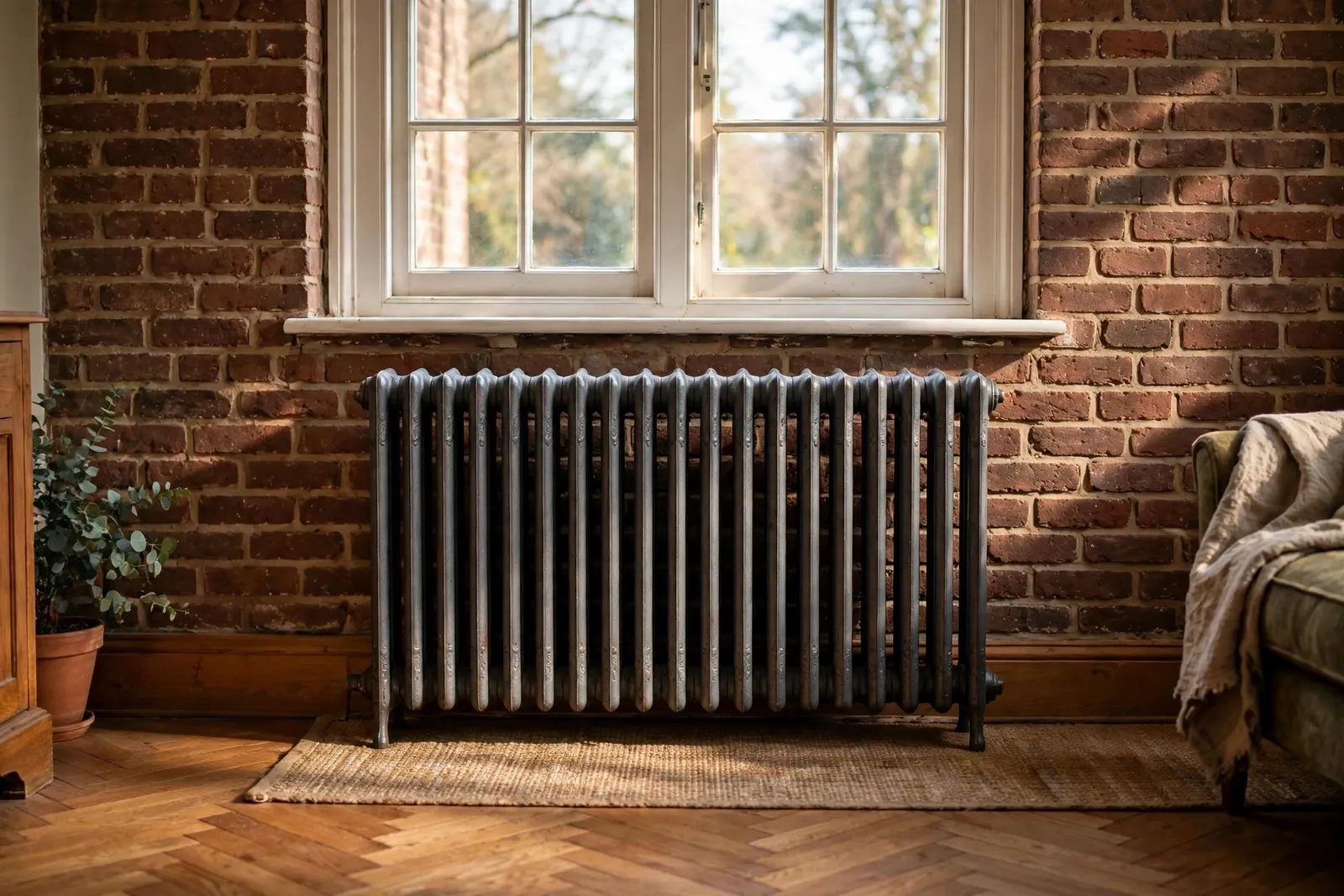
Rest your hand on the radiator: the top is toasty, the bottom is stone cold, and the room never warms up. If your radiators are cold at the bottom, the system is telling you something specific about what is inside the pipes. This guide explains why bottoms go cold, how to tell sludge from trapped air, safe DIY steps, and how professionals fix it in Newark homes.
Need boiler help in Newark right now?
Call (973) 275-8278 for fast, honest service.
Call (973) 275-8278A cold bottom is one of the most diagnosable radiator symptoms. The pattern points straight at the cause, and most causes have established fixes. The catch: the usual cause is sludge, which does not stay in one radiator. It circulates, settles, and slowly chokes the whole system.
What a Cold Bottom Actually Tells You
Heat rises and debris sinks. Hot water enters the radiator, gives up heat through the metal, and cooler water returns to the boiler. When fine black sludge builds up, gravity pulls it to the lowest points: bottom channels and low pipe runs. The sludge layer insulates metal from water, so the bottom stays cold while the top heats.
The pattern is distinctive. Cold all over means no flow, usually a closed valve. Cold at the top means trapped air. Hot top with cold bottom means sediment where water should be. Each has its own fix, so describing exactly where the cold spots are helps a technician diagnose by phone.
Sludge: The Main Culprit in Newark Radiators
Sludge is mostly magnetite, a black iron-oxide paste formed when oxygen in system water corrodes steel radiators and iron pipework from inside. Every system generates some. Systems topped up often, run without inhibitor, or mixing metals generate it fast. Newark's older housing gives sludge decades of material to work with.
Past a critical mass, sludge does more than cool bottoms. It settles in the heat exchanger, causing overheating and kettling. It wears pump seals and blocks thermostatic valves. Cold bottoms usually mean the boiler and pump are already working too hard.
Trapped Air vs. Sludge: How to Tell the Difference
The rule is simple: cold at the top means air, cold at the bottom means sludge. Air rises, so a cold top with hot bottom is the airlock signature, and bleeding fixes it in minutes. Sludge does the opposite. A hot top with cold bottom will not change with bleeding, because the problem is sediment, not gas. Repeated bleeding just drops pressure and adds fresh oxygenated water, which makes more sludge. Check the pattern before reaching for the key.
Why Older Newark Systems Sludge Up Faster
Three local factors stack the deck. Age: original cast-iron radiators and steel pipework with decades of internal corrosion. Water: frequent top-ups feed fresh oxygen into the loop. History: systems never flushed or dosed with inhibitor carry a lifetime of accumulation. Open-vented systems with an attic feed tank sludge fastest, since the tank constantly absorbs air.
How Professionals Fix Cold-Bottom Radiators
Diagnosis starts by confirming the pattern: feeling every radiator, checking flow temperatures, testing a water sample. Dark, magnetic water confirms sludge. For moderate cases, a powerflush drives high-velocity water with cleaning chemicals through radiator by radiator, followed by a rinse, inhibitor dose, and balancing of lockshield valves. Severe cases may need radiators removed for bench flushing, or blocked pipe sections replaced. A magnetic filter on the return then catches future magnetite. Our Radiator Repair & Installation in Newark work follows exactly this method.
What You Can Try Yourself
Start with the pattern check. Cold at the top: bleed with the system cool until water runs clear, then check boiler pressure. That is the proper homeowner fix for air. Cold at the bottom: do not attempt a powerflush yourself. Instead, check thermostatic valves are not stuck, clear furniture and curtains from airflow, and list which radiators are affected. That list genuinely helps the technician.
Mistakes Homeowners Make
- Bleeding sludged radiators repeatedly. It drops pressure, adds oxygen, and changes nothing at the bottom.
- Turning the thermostat up. The boiler burns more fuel for the same cold spots.
- Draining and refilling often. Every refill is fresh oxygen and minerals, accelerating corrosion.
- Replacing radiators without flushing. New radiators on a sludged system collect sediment from day one.
When Cold Bottoms Signal Something Urgent
Usually a repair-soon issue, but call promptly if the boiler kettles loudly, locks out, or shows pressure trouble alongside the cold spots. Sludge starving the heat exchanger of flow can overheat it. Our Emergency Boiler Repair in Newark covers urgent no-heat situations.
Cold Radiators Across Newark
We see this citywide. The big cast-iron radiators in the Ironbound, in our boiler repair in Ironbound work, sludge after decades. Our boiler repair in North Newark calls find it in converted two-families never flushed. Our boiler repair in East Orange visits pair cold bottoms with stuck valves. Same physics, same fix. Annual Boiler Maintenance & Tune-Ups in Newark keeps sludge from rebuilding.
When Cold Radiators Mean Call Us
Cold-bottom radiators need professional cleaning. The fix is established once confirmed, and early action protects boiler and pump from sludge strain. Brick City Boiler restores full heat systematically. Call (973) 275-8278 before a cold bottom becomes a cold house.
Need boiler help in Newark right now?
Call (973) 275-8278 for fast, honest service.
Call (973) 275-8278Frequently Asked Questions
Should I bleed a radiator that is cold at the bottom?
Bleeding helps a cold top, which signals air. A cold bottom signals sludge, which bleeding will not move. Bleed once to rule air out, then arrange a flush if the bottom stays cold.
Will turning up the thermostat fix cold radiators?
No. The boiler just runs longer. If sludge blocks flow through the bottom, hotter water still cannot get through, and fuel bills climb for the same cold spots.
Can sludge damage my boiler?
Yes. It settles in the heat exchanger, causing overheating and kettling, wears pump seals, and blocks valves. Cold bottoms are often the first visible sign of system-wide trouble.
Why is only one radiator cold at the bottom?
That radiator has the worst local buildup, a stuck valve, or sits where sludge settles first. But sludge is system-wide, so one cold radiator often means others are partway there.
How do I stop sludge from coming back after a flush?
Inhibitor dosed after the flush, a magnetic filter on the return pipe, and annual servicing to check water quality. Maintained systems stay clean for years.
Do cold-bottom radiators mean I need new radiators?
Usually not. Flushing restores sludged radiators. Replacement only makes sense for radiators corroded through or leaking, which a technician can confirm on the visit.