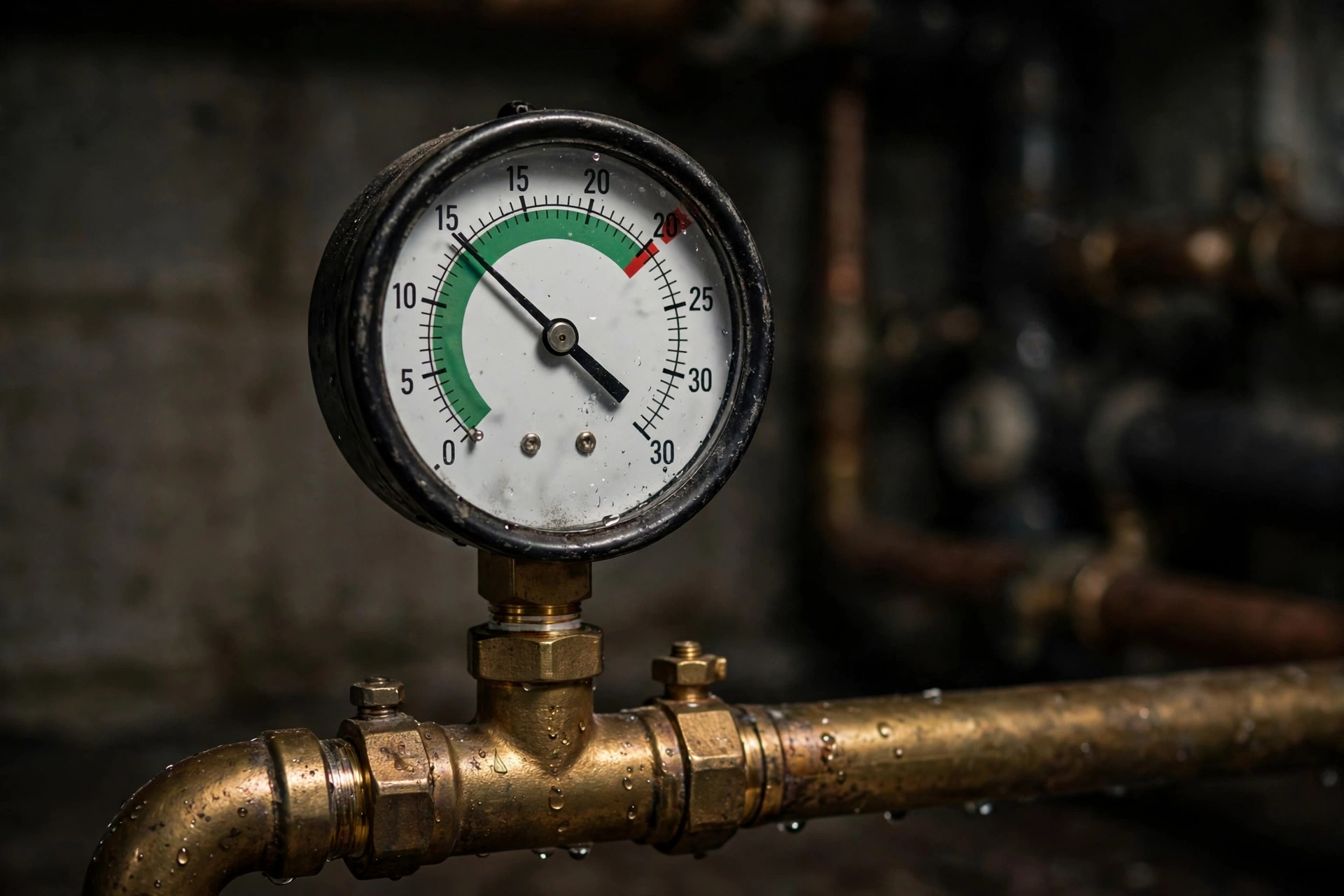
You check the gauge on Monday and it reads fine. By Friday the needle has sunk again, the radiators are lukewarm, or the boiler has locked out. A boiler that keeps losing pressure is losing water somewhere, and the fix starts with finding where. This guide covers what pressure means, why it drops, safe checks, and when to call us.
Need boiler help in Newark right now?
Call (973) 275-8278 for fast, honest service.
Call (973) 275-8278Most pressure loss has a diagnosable cause, and most are straightforward once found. But chronic low pressure stresses the pump and heat exchanger, and topping up without finding the leak lets water damage develop quietly.
What Boiler Pressure Means
On a sealed hot-water boiler, pressure pushes heated water to your radiators and back. Most systems sit around 1 to 1.5 bar cold, rising slightly as water heats. The front gauge tells the story, and many dials mark the normal range. Fall too far and modern boilers lock out with a fault code. That is self-protection: low water lets the pump run dry and the heat exchanger overheat. A pressure drop is not just comfort. Left alone, it becomes equipment damage.
Steam vs. Hot Water: Pressure Loss Looks Different
Much of Newark heats with steam, which has no sealed pressurized loop. On steam you watch the sight glass, not a gauge. A falling water line, a constantly running feeder, or hand-filling every few days is the steam version of losing pressure. Causes overlap: leaks and failed feeders lose water on steam as leaks lose pressure on hot-water systems. This guide focuses on sealed systems, but the leak-hunting logic fits both.
The Most Common Causes of Pressure Loss
Leaks in the system. The top cause. A weeping radiator valve, pinhole in aging copper, or failing pump seal. Small leaks evaporate on hot pipes before puddling, so the gauge can fall for weeks with nothing visible.
A faulty pressure relief valve. A safety device that opens on overpressure. A weak spring or debris lets it dribble water outside through the discharge pipe. A damp patch below that pipe is the classic clue.
A failed expansion vessel. A small tank whose diaphragm absorbs expansion as water heats. If the diaphragm splits, pressure spikes on firing, the relief valve dumps water, and the system sits low when cool.
Air in the system. Air in radiators displaces water. Bleeding releases both, so pressure always dips after bleeding. Normal once. A continuous fall with no bleeding is not.
Recent work on the system. Pressure dropping after a repair or drain-down usually means a disturbed joint weeps, or air working out of refilled pipework. One top-up and a week of watching; falling again means call back.
How to Check Your Boiler Pressure Safely
Read the gauge cold, before morning heat runs. Note the reading, recheck in a few days under the same conditions. A falling trend across cold readings is real loss. Scan under the boiler and along visible pipes for dampness or crust, and check the outside discharge pipe. No tools or open panels needed.
What You Can Do Yourself
On sealed systems, topping up via the filling loop is safe if you know your model: open valves slowly, watch the gauge reach normal, close firmly, check for drips. Once, then watch a week. Rule: topping up is diagnosis, not maintenance. More than once or twice a season, stop and get it checked. Each refill adds oxygen that corrodes from inside. On steam, never run the sight glass dry or leave the manual feed open.
Mistakes That Make Pressure Problems Worse
- Topping up forever. Fresh water brings oxygen that accelerates corrosion and breeds new leaks.
- Over-pressurizing. Filling past normal just triggers the relief valve to dump the excess.
- Ignoring the discharge pipe. A wet outside pipe shows exactly where water is leaving.
- Capping the discharge. Never block a safety device.
When Low Pressure Signals Something Urgent
Zero pressure overnight, pooling under the boiler, a steadily running relief pipe, or no restart after topping up deserve prompt attention. Our Emergency Boiler Repair in Newark covers urgent no-heat and active leaks. Otherwise, gauge readings and fall rate usually allow honest phone triage.
Pressure Loss Across Newark
We trace pressure loss citywide. Our boiler repair in Forest Hill jobs often hide pinhole leaks in original copper. Our boiler repair in Vailsburg calls reveal tired relief valves. Our boiler repair in Ironbound work uncovers weeping valves in converted multis. Same method: find the water, fix it. Annual Boiler Maintenance & Tune-Ups in Newark catches slow failures early.
When Pressure Loss Means Call Us
A boiler that keeps losing pressure needs professional diagnosis. Fixes are usually straightforward once found, and early action prevents the corrosion and damage that endless topping up invites. Call (973) 275-8278 before a falling gauge becomes a failed boiler.
Need boiler help in Newark right now?
Call (973) 275-8278 for fast, honest service.
Call (973) 275-8278Frequently Asked Questions
Is it normal for boiler pressure to drop a little?
A very slow drop over months can be normal as air works out through vents. A visible week-to-week drop, or any drop that locks the boiler out, points to a leak or failed component.
Can I keep topping up my boiler pressure myself?
An occasional top-up on a sealed system is fine. More than once or twice a season masks a leak, and each refill adds oxygen that corrodes radiators and pipework from inside.
Why does my boiler lose pressure overnight?
Leaks that open as pipework cools, or a relief valve passing after the evening cycle. Check the gauge cold over several mornings. A steady overnight fall usually means a hidden leak or faulty valve.
Will low boiler pressure damage the boiler?
Yes, if it goes far enough. Low water lets the pump run dry and creates heat-exchanger hot spots. Repeated lockouts stress controls and seals, shortening equipment life.
How often should I check my boiler pressure?
Monthly during heating season. Check it cold, before heat runs, and write readings down. A log turns a vague feeling into clear evidence of a trend.
My pressure gauge reads zero. What should I do?
Check for visible leaks, top up carefully into the normal range, and watch it. If it falls straight back or the boiler will not restart, call for service rather than refilling blindly.