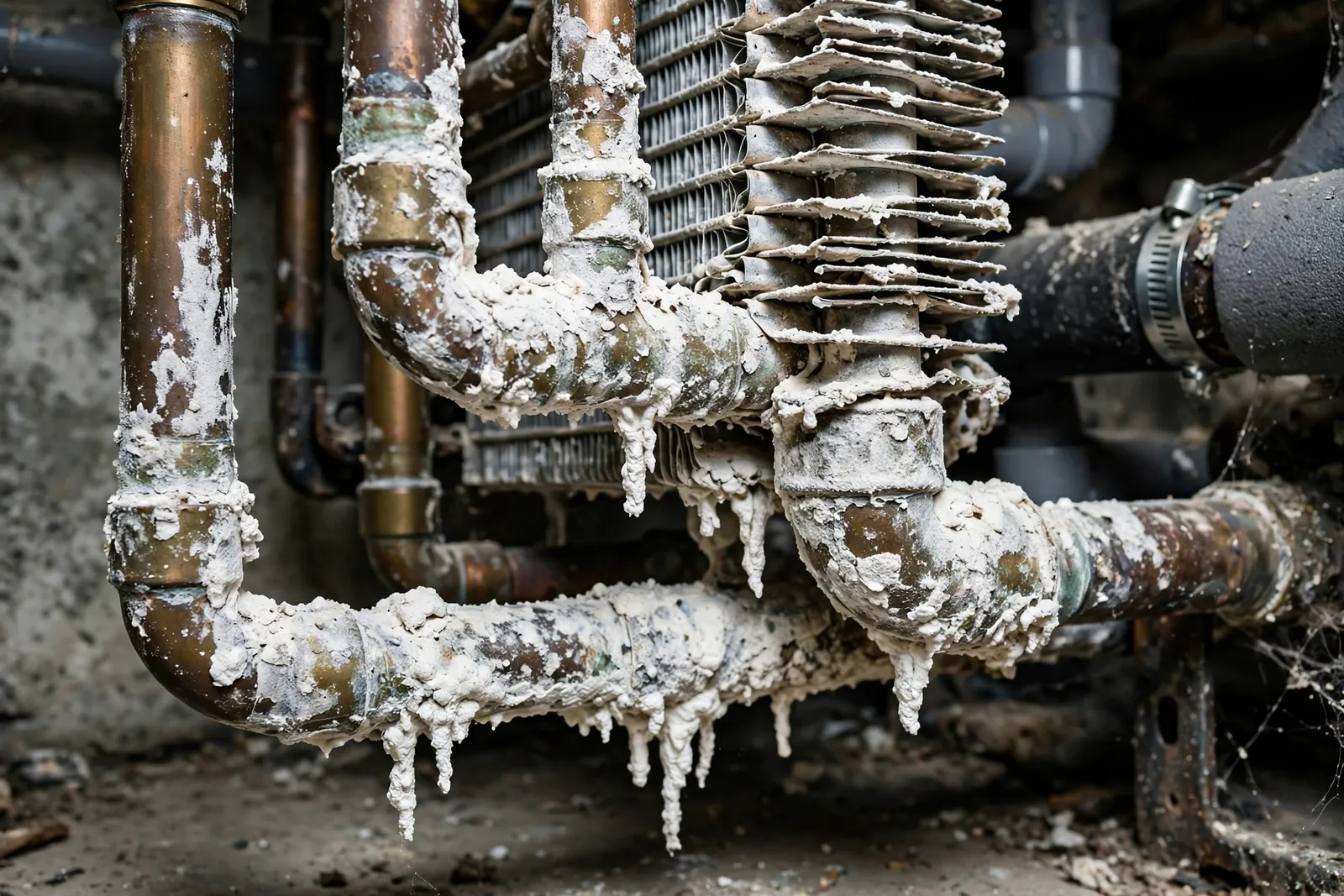
You cannot see it, taste it, or smell it, but the water coming into your Newark home is quietly working against your boiler. Northern New Jersey water carries a healthy load of dissolved calcium and magnesium. Every time that water heats up inside your boiler, some of those minerals drop out and bake onto the metal as scale. Year after year, the crust gets thicker.
Scale is an insulator. A heat exchanger coated in it has to burn more fuel to push the same heat into your radiators. Efficiency slides, parts run hotter than they were designed to, and the boiler ages faster than it should. The good news is that this is a slow, manageable problem, not a sudden failure, and there are proven ways to fight it.
Why Newark Water Is Hard on Boilers
Hardness varies by source, but much of the water serving Newark and the surrounding Essex County towns runs moderately hard to hard. It is perfectly fine to drink. The trouble starts at boiler temperatures. Above about 140 degrees, calcium carbonate precipitates out of solution and bonds to the hottest surfaces it can find, which in your heating system means the heat exchanger.
Steam boilers have it worst. They boil water into steam constantly and replace what is lost with fresh makeup water, so minerals concentrate with every cycle. Hot-water systems fare better because the same water circulates in a sealed loop, but every top-up after a repair or a pressure drop adds a fresh dose of minerals to bake on.
Age compounds it. Newark has a huge stock of older homes with original or decades-old boilers. Twenty years of scale in a system that has never been flushed is a different animal from a five-year-old unit. If your boiler predates the Clinton administration, assume scale is part of its story.
What Scale Does Inside Your Boiler
Picture the heat exchanger as a wall between the flame and your heating water. Scale builds up on the water side of that wall like plaque in an artery. Heat has to push through the crust before it reaches the water, so the metal on the flame side runs hotter than designed. Hotter metal fatigues faster, and the burner runs longer cycles to deliver the same warmth.
Scale hits you twice. First in fuel, because efficiency drops a few percent for every millimeter of scale. Then in breakdowns, because overheated components fail early. Heat exchangers develop hot spots, gaskets bake out, and circulator pumps work against narrowed passages. None of this happens overnight, which is why it goes unnoticed until the bills climb or something breaks.
Warning Signs Your Boiler Is Scaling Up
Your boiler will tell you, if you know what to listen for. Kettling is the classic symptom: a rumbling or popping sound like a kettle coming to a boil. That is steam bubbles forming under scale deposits and collapsing. It is the sound of inefficiency you can hear from across the basement.
Other clues are subtler. Radiators that heat unevenly, with cold spots at the bottom, often point to sludge and scale settling in the system. Our guide on why radiators go cold at the bottom digs into that specifically. Fuel bills that creep up year over year without a change in thermostat habits are another tell. So is pressure that needs frequent topping up, which keeps introducing fresh mineral-laden water.
None of these symptoms proves scale on its own, but together they paint a picture. A technician can confirm it during annual boiler maintenance by inspecting the heat exchanger and checking the condition of the system water.
Flushing: What It Does and What It Doesn't
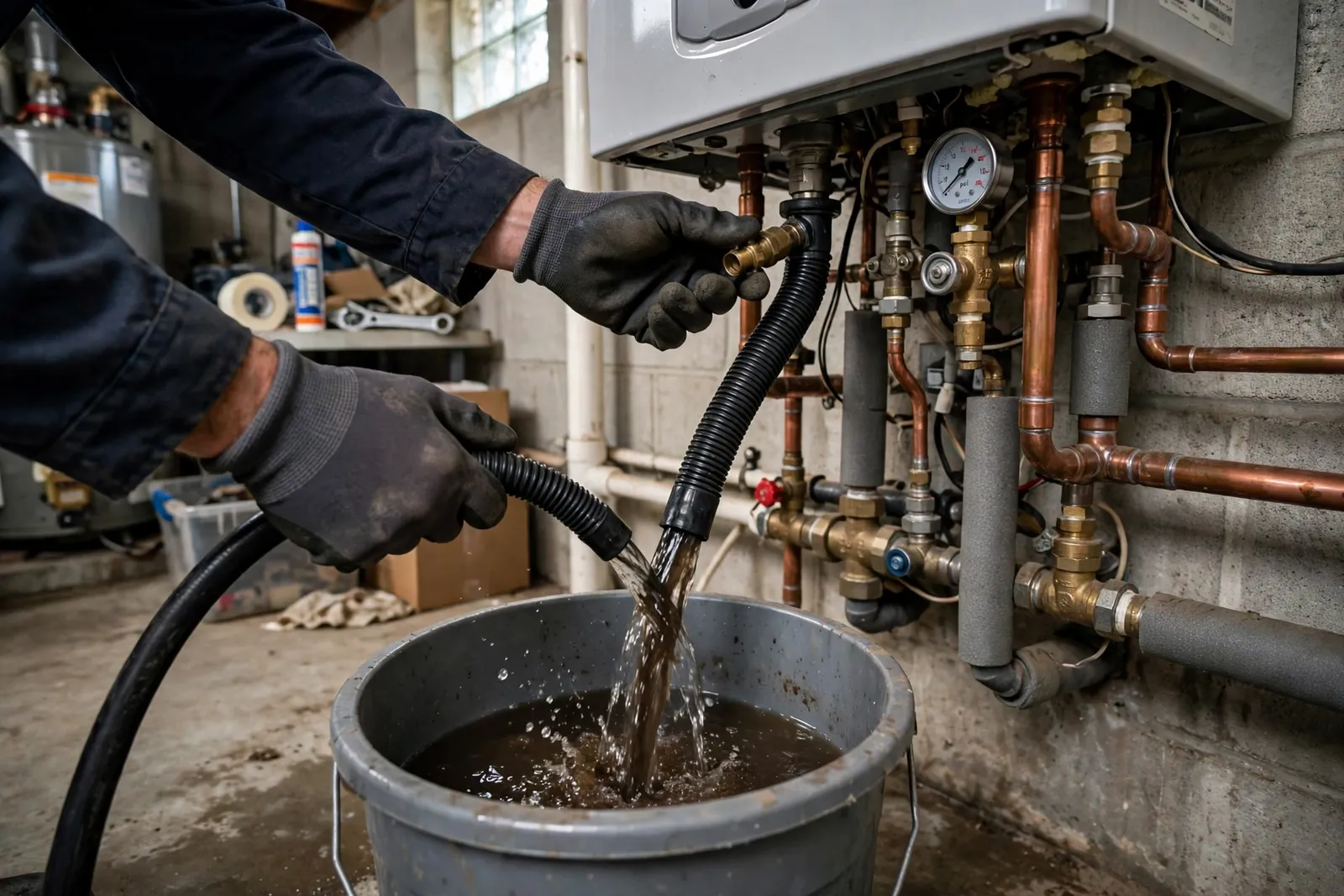
A power flush pushes water through the system at high velocity, sometimes with cleaning chemicals, to dislodge sludge and loose scale. On a system with moderate buildup it can restore circulation, even out radiator heat, and buy years of better performance. It is the closest thing to a reset button your boiler has.
What it cannot do is restore a heat exchanger that is deeply scaled or pitted underneath the deposits. Heavy, rock-hard scale bonded to metal for decades often stays put. Worse, aggressive flushing on a fragile old system can dislodge debris that clogs narrow passages or expose pinhole leaks that the scale was effectively plugging. That is why flushing should be a judgment call by someone who has seen the system's condition, not a routine upsell.
For most Newark boilers, a flush every few years, timed with maintenance, hits the sweet spot. It keeps loose debris from accumulating without stressing aging components. Ask your technician what came out of the system. Dark, gritty water means the flush earned its keep.
Water Treatment Options That Actually Help
The best fight against scale starts with the water going in. A whole-house water softener removes calcium and magnesium before they ever reach the boiler, which helps every top-up and protects the domestic hot water side too. It is the single most effective step for homes with very hard water.
For the heating loop itself, chemical scale inhibitors dosed into the system water slow new deposits from forming. They go in during a service visit and keep working silently for a year or more. Magnetic and electronic conditioners get marketed heavily, but the evidence for them is thin compared to softening and inhibitors. Put your effort where the proof is.
Steam boiler owners should pay extra attention. Because makeup water is constant, treatment matters more, not less. Regular blowdowns that drain concentrated boiler water and replace it with treated feed water are part of proper steam boiler care, and skipping them is how scale wins.
Keeping Your Boiler Healthy Long Term
Scale is a maintenance issue, not a death sentence. The boilers that last 25 or 30 years in Newark, and plenty do, get three things: annual service, attention to water quality, and prompt repairs before small problems cascade. Our overview of how long boilers last in New Jersey shows what separates the long-lived units from the early replacements, and water treatment is near the top of the list.
If your system is already showing its age, the repair-versus-replace math changes. Scale damage to a heat exchanger is often the beginning of the end, and at some point the sensible move is a new unit rather than another season of declining efficiency. When that day comes, a properly sized new boiler with treated water from day one will outlive whatever it replaced.
For now, listen for kettling, watch your fuel bills, and keep up with maintenance. Your boiler is fighting Newark's water every day it runs. Give it the backup it deserves.
If your system is showing the warning signs, our fall boiler maintenance checklist is a good seasonal starting point before you call.
Boiler rumbling or heating unevenly?
Call (973) 275-8278 and tell us what you are hearing.
Call (973) 275-8278