You are sitting in the living room of your Ironbound three-family on a mild November afternoon, and the boiler keeps starting and stopping. It fires up, runs for three or four minutes, shuts off, and then, ten minutes later, it does it all over again. The radiators get warm, then cool, then warm again. The house never quite settles. That on again, off again pattern has a name: short cycling. And it is telling you something about your heating system.
Short cycling is common in Newark, and it is common for a reason. This city is full of old boilers in old houses, and many of those boilers were sized for a different era, when windows leaked, insulation was thin, and nobody worried about fuel use. A boiler that was right for a drafty 1920s brownstone can be far too big for the same house after new windows and insulation. Add a thermostat in the wrong spot or a pressure switch that is drifting, and the boiler starts doing sprints instead of steady runs.
What Short Cycling Looks Like
A healthy boiler fires, runs long enough to heat the water and warm the radiators, and then rests until the house cools a few degrees. On a cold January night, that run might last twenty or thirty minutes. On a mild fall day, it might run ten. Short cycling is different. The boiler fires for three to five minutes, shuts off, and fires again a few minutes later, all day long, even when the weather is mild. You hear the burner kick on constantly. The radiators feel warm at the top and cool at the bottom, or they never get properly hot at all.
The easiest way to confirm it is to watch the boiler for half an hour. Sit near it with a clock. Note when the burner fires and when it stops. If you count four or five cycles in thirty minutes on a mild day, that is short cycling. One short run on a warm afternoon is not a problem. All-day rapid cycling is, and it is worth finding the cause before the cold weather arrives in earnest.
An Oversized Boiler Is the Classic Cause
The most common cause of short cycling in Newark is a boiler that is too big for the house. An oversized boiler heats the water to temperature in a few minutes, the thermostat is satisfied, and the boiler shuts off. But the radiators have not had time to spread that heat through the rooms, so the house cools quickly and the boiler fires again. The boiler spends its life starting and stopping, and every start is the hardest, most wasteful part of the run.
This is a Newark problem because so many of our boilers were installed decades ago, when houses lost heat fast. Since then, owners have added insulation, sealed windows, and replaced doors, and the house needs far less heat than it used to. The boiler never got the memo. If your boiler is original to a brownstone that has been renovated, or if it was sized by rule of thumb instead of a heat loss calculation, oversizing is the first suspect. The fix is not a bigger boiler, it is the right boiler, and that is a conversation to have before the old one gives up. Our boiler replacement page explains how proper sizing works, and why the smallest boiler that does the job is usually the best one.
Thermostat Trouble
The second usual suspect is the thermostat, and it is the simplest to fix. A thermostat in a bad spot will lie to the boiler all day. One mounted on a cold outside wall, or above a radiator, or in a hallway that gets a draft every time the front door opens, will call for heat when the house does not need it, or shut the boiler off before the rooms are warm. The result looks exactly like short cycling, but the boiler is fine. The thermostat is just confused.
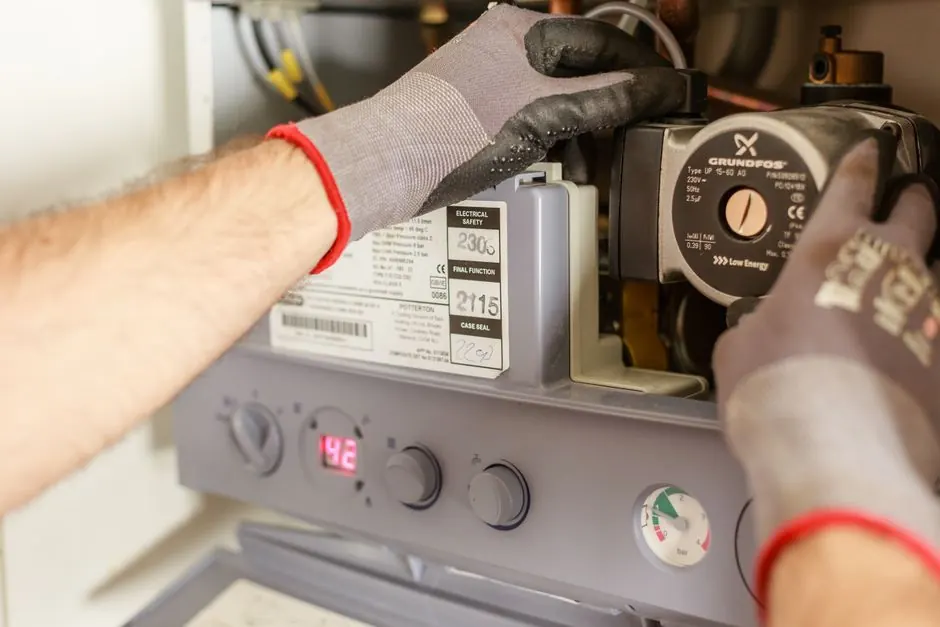
Check the location first. A thermostat belongs on an inside wall, away from radiators, windows, and direct sun, in a room the family actually uses. Then check the settings. A heat anticipator set wrong, or a cycle rate set too high for a steam or hot water system, will make the boiler fire too often. If the thermostat is old, a new one with the right settings for your system can steady the whole house. Our thermostat and heating controls page covers placement and settings for Newark systems, and a tune-up visit can check whether the thermostat and the boiler are talking to each other properly.
Pressure and the Pressure Switch
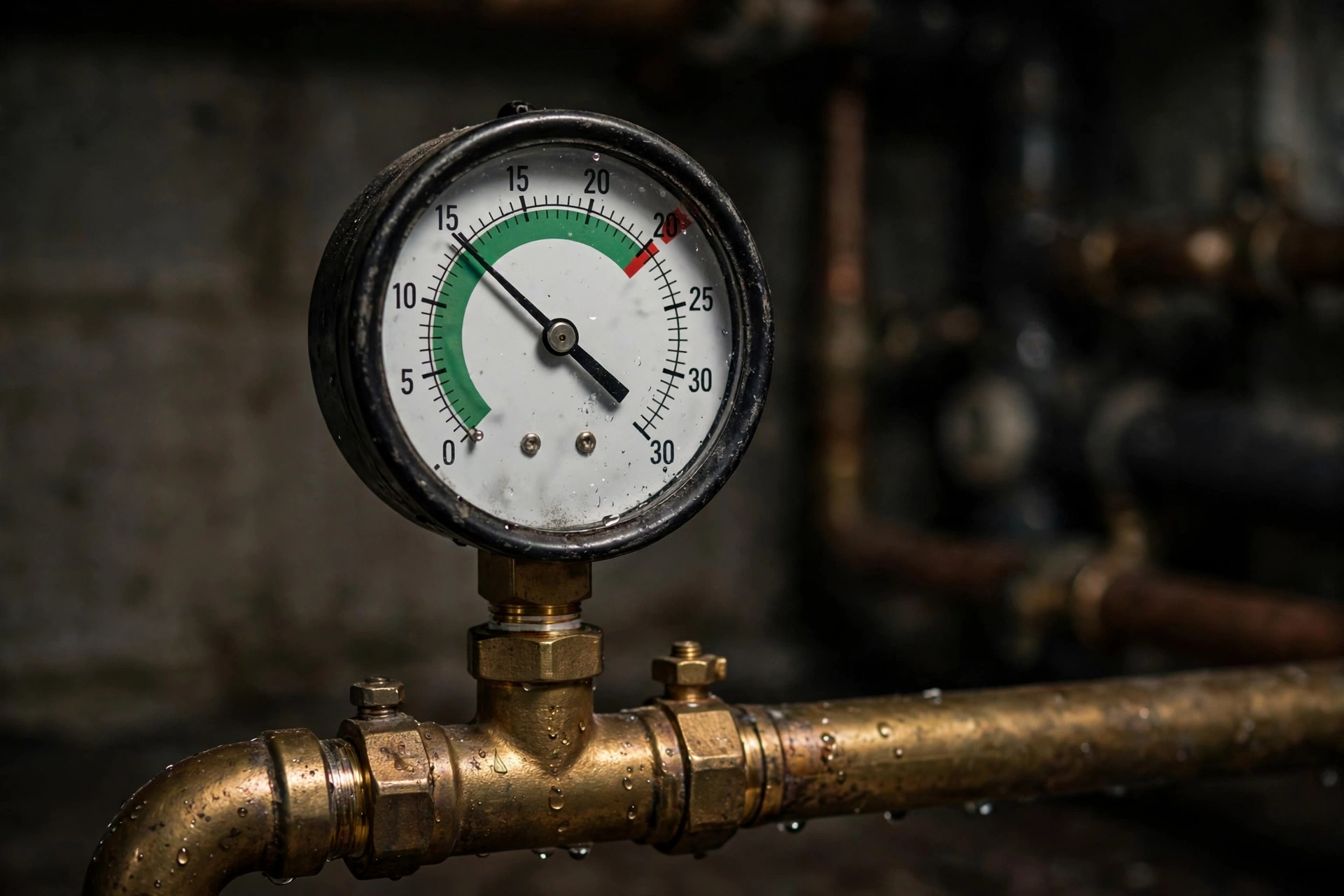
On a hot water boiler, pressure matters, and a pressure problem can cause short cycling too. If the system pressure is too low, the boiler may fire, hit a limit, and shut down before the radiators warm up. If the pressure relief valve is weeping, or the expansion tank has lost its air charge, the pressure swings up and down with every cycle, and the boiler keeps tripping its own safety limits. You can check the gauge yourself: it sits on the front of the boiler, and on a cold system it usually reads somewhere in the low teens. If it reads near zero, or if it climbs fast when the boiler fires, something needs attention.
Steam boilers have their own version of this. A pressuretrol, the switch that tells a steam boiler when to stop, can drift out of adjustment after years of service. Set too low, it shuts the boiler off before the steam reaches the radiators. The house stays cold, the boiler cycles constantly, and the fuel bill climbs. Our guide on why your boiler is losing pressure explains what to check first, and a pressure switch adjustment is a small job for a technician who works on steam every day.
What Short Cycling Does to Your Boiler
It is tempting to live with short cycling. The house is warm enough, after all. But every start wears the system. A boiler burns the most fuel in the first minutes after firing, while the burner warms up and the flue clears. Short runs mean the boiler spends most of its time in that wasteful startup phase and almost none in steady, efficient running. Over a Newark winter, that adds up to real wasted fuel and noticeably higher bills.
The wear is worse than the fuel. Starting and stopping is hard on every part: the igniter, the burner, the circulator pump, the controls. Parts that should last years wear out in seasons. And a boiler that cycles constantly runs hotter at the flue and cooler at the radiators, which means more soot, more condensation, and more corrosion inside the system. Short cycling does not usually break a boiler in a week. It grinds it down over a winter or two, and then it breaks on the coldest night of the year, which is when every other boiler in Newark breaks too.
What You Can Check Before You Call
Before you call, there are a few checks you can do yourself. Look at the thermostat first: is it on an inside wall, away from drafts and radiators, and is it set to a steady temperature rather than swinging up and down all day? Big setbacks, dropping the house to 60 overnight and asking for 72 in the morning, make any boiler cycle hard, and they make an oversized one worse.
Next, look at the pressure gauge and the radiators. A gauge near zero on a cold boiler, water under the unit, or radiators that are hot at the top and cold at the bottom all point to a system problem rather than a boiler problem, and our guide on radiators that are cold at the bottom walks through what that means. Bleed the radiators if they are hot water and gurgling, and make sure the radiator valves are open. If the cycling continues after those checks, write down what you see: how long each run lasts, how many cycles per hour, and whether it happens on mild days or only in the cold. That note is the first thing a technician will ask for, and it points straight at the cause.
Short cycling is your boiler asking for attention in the only language it has. Listen to it now, in November, while the weather is still forgiving. By January, every heating company in Newark is booked solid, and a boiler that has been cycling all fall is the one most likely to quit on a ten-degree night.
Related guide: Why Is My Boiler Losing Pressure?
Boiler firing every few minutes?
Call (973) 275-8278 and tell us how long each cycle lasts and what you have noticed.
Call (973) 275-8278