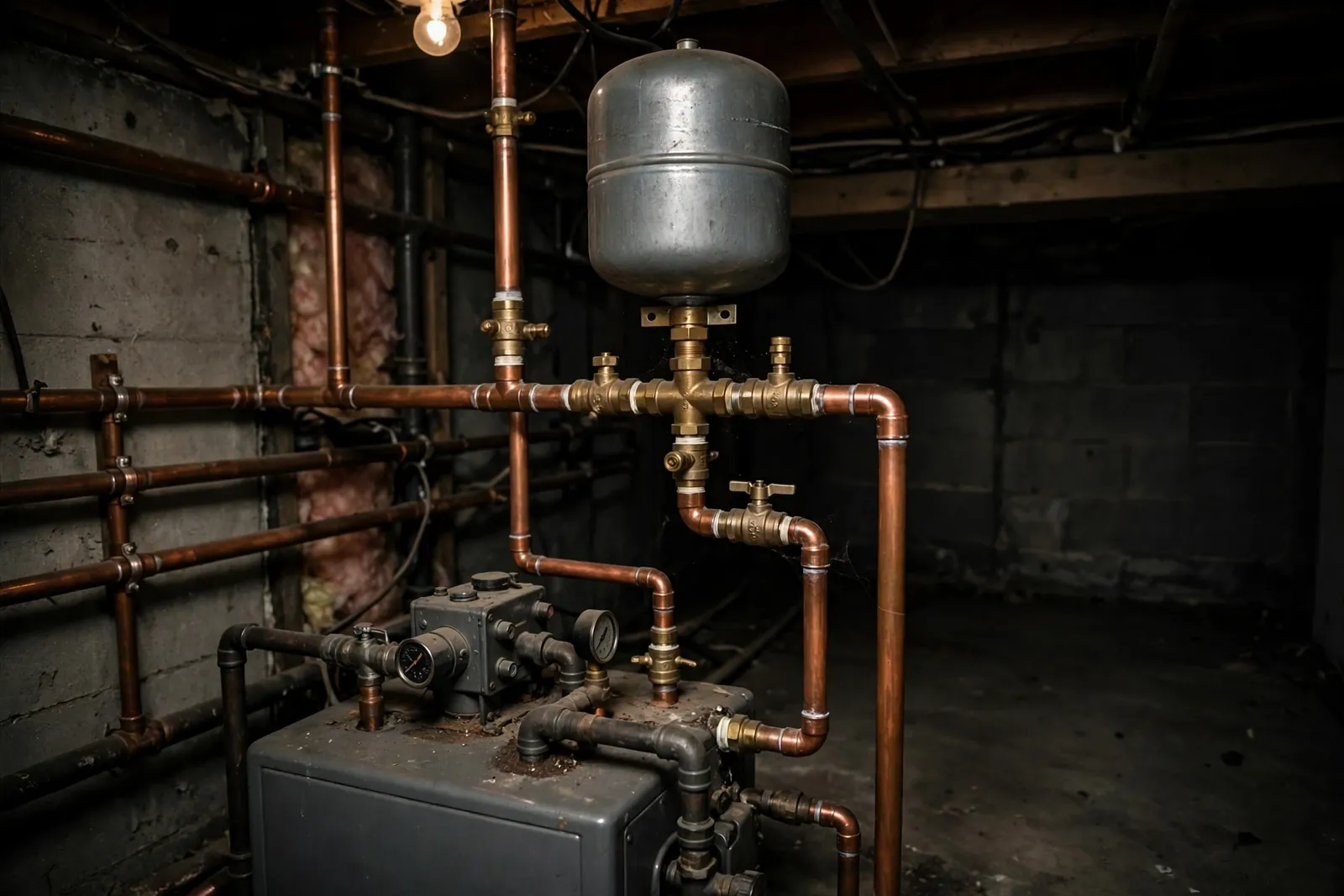
You go down to the basement and the gauge catches your eye. The needle sits higher than you remember, somewhere up near 30, and there is a damp patch under the relief pipe. Maybe the radiators have been banging more than usual. Maybe nothing seems wrong except that needle. Either way, stop and think before touching anything. A boiler holds hot water under pressure, and high pressure means something in the loop has changed.
High pressure usually has a short list of causes, and the two most common are parts a technician deals with every week: the expansion tank and the fill valve. This blog covers what normal pressure looks like, how those parts fail, what you can safely check, and when to shut the boiler down and call a pro.
What High Pressure Looks Like on Your Boiler
A hot water boiler in a Newark two family or brownstone usually runs at 12 to 15 PSI when the water is cold, and the pressure climbs as the water heats and expands. Seeing 20 to 25 PSI on a hot system is common. The number that matters is 30. Most residential relief valves open at 30 PSI, discharging hot water through the relief pipe to a floor drain or bucket. That discharge is the safety valve doing its job, and the clearest sign pressure has gone too high.
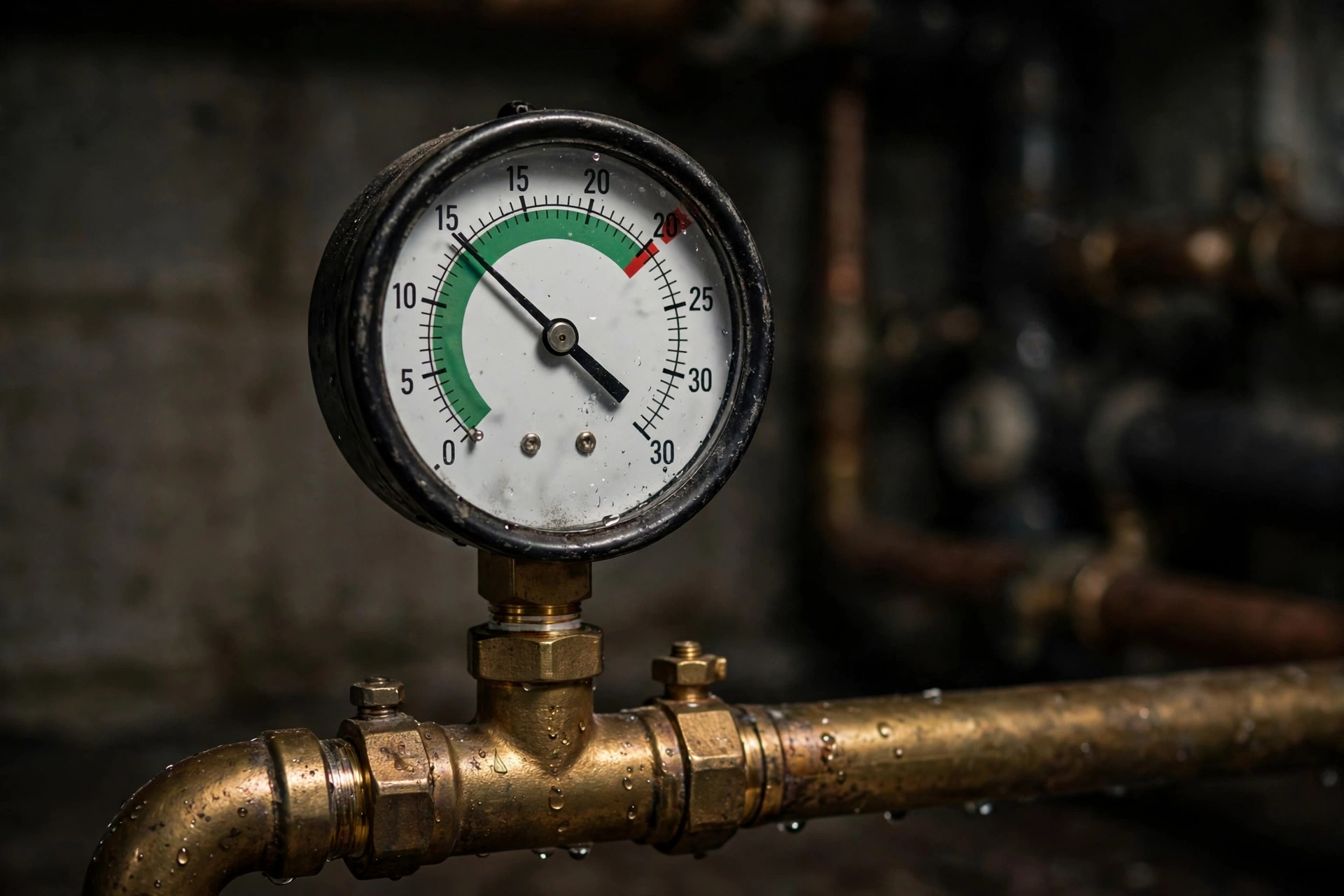
Other signs show up before the relief valve opens. The needle may sit high even when the boiler is cold, which points to too much water in the system. Radiators may bang or gurgle more as pressure pushes air around the loop. The relief pipe may weep after each cycle, leaving a rust stain on the floor. Sometimes the gauge itself is the problem: an old gauge can stick or stop moving. The opposite problem has its own signs, covered in why your boiler loses pressure.
The Expansion Tank: The Usual Suspect
Water expands as it heats, and a closed heating loop has nowhere for that extra volume to go. The expansion tank is the cushion. Inside a modern tank, a rubber diaphragm separates water from a pocket of pressurized air. As water heats and expands, the air pocket compresses and absorbs the extra volume, so pressure rises only a little. When the diaphragm fails or the air charge leaks out, the tank fills with water and loses its cushion, and every heating cycle pushes pressure straight up, sometimes to the relief valve.
There is a simple check you can do without tools. Tap the tank from top to bottom with a knuckle. The top half should sound hollow, where the air pocket sits, and the bottom dull, where the water sits. If the whole tank sounds solid and dull, it is waterlogged. Older steel tanks have no diaphragm, and their air slowly dissolves into the water, so they need draining and recharging from time to time. Newark has plenty of both types, from 1950s steel tanks in Vailsburg colonials to diaphragm tanks in newer Ironbound rehabs. Swapping a tank is not a do it yourself job: the system must be drained down, the new tank charged to match, and the loop refilled and bled. That work belongs in a boiler maintenance and tune up visit.
The Fill Valve: When Water Keeps Coming In
The fill valve, also called the pressure reducing valve, feeds fresh water into the loop to replace what is lost through tiny leaks, air venting, and bleeding. It should open only when system pressure drops below its setting, usually around 12 PSI, and close once pressure is restored. When debris lodges in the seat or the parts wear, the valve sticks open and keeps feeding water in. Pressure climbs slowly and steadily, even when the boiler is cold, because house water pressure is far higher than the boiler needs.
One clue is a gauge that rises overnight while the boiler sits idle. Another is a system that keeps gaining pressure after you bleed a radiator. There is a careful test: find the manual shutoff on the feed line, close it, and watch the gauge for a few hours with the boiler running normally. If pressure stops climbing, the fill valve is the likely culprit. If it keeps climbing with the feed shut, the expansion tank is more likely. Do not leave the feed shut for days, and do not adjust the fill valve by guesswork. If you also see dampness around fittings, read what to do when your Newark boiler leaks water.
Other Causes Worth Knowing
Not every high reading is the tank or the fill valve. A faulty gauge is common, especially the original gauge on a thirty year old boiler: if it reads high but the relief valve never opens and the radiators heat normally, a second gauge reading settles it fast. Overfilling after bleeding radiators is another cause, since the fill valve tops the system back up after each radiator you bleed. Learn the sequence in how to bleed radiators in a Newark brownstone before you start. On steam systems the picture differs: they run on very low pressure, have no expansion tank, and high pressure usually means a control fault. If you are not sure which system you have, steam vs hot water boilers explains how to tell. Either way, do not force a valve, cap a relief pipe, or ignore a gauge past 30.
What Is Safe to Check Yourself
You can learn a lot without touching a wrench. Work through these checks in order:
- Read the gauge cold and hot. Note the pressure after an hour off, then after a full heating cycle. A big jump points to the expansion tank. A high reading when cold points to the fill valve or overfilling.
- Look at the relief pipe. Drips, a rust stain, or a warm pipe mean the valve has been opening. A steady stream means shut the boiler down and call.
- Tap the expansion tank. Hollow at the top and dull at the bottom is normal. Solid all the way down means waterlogged.
- Find the feed line shutoff. Know where it is before you need it. Do not close it except for the fill valve test above.
- Listen to the radiators. New banging or gurgling suggests air moving in the loop. Note which radiators make noise and mention it when you call. See why a boiler makes banging noises.
What not to do matters just as much. Do not open the relief valve repeatedly to bleed pressure off: debris can keep it from resealing. Do not loosen fittings or drain water from a hot system. Do not adjust the fill valve by feel. And do not route the relief pipe somewhere you cannot see it. Hiding it hides the warning too.
When to Shut It Down and Call a Pro
Some high readings can wait for a scheduled visit. These cannot. Shut the burner off with the emergency switch, usually a red switch plate near the basement stairs, and call if the relief valve is discharging steadily, the gauge sits at or above 30 PSI and keeps climbing, water is pooling, or you hear hissing or see steam. Let the system cool before anyone works on it. Hot water under pressure scalds fast.
Brick City Boiler handles emergency boiler repair across Newark, from Forest Hill to the Ironbound, and a discharging relief valve is treated as urgent. When you call, say what the gauge reads cold and hot, whether the relief pipe is dripping, and what the tank sounded like when you tapped it. Those details tell the technician which parts to bring. A fall check through our fall boiler maintenance checklist catches most pressure problems before heating season.
What a Technician Checks and Fixes
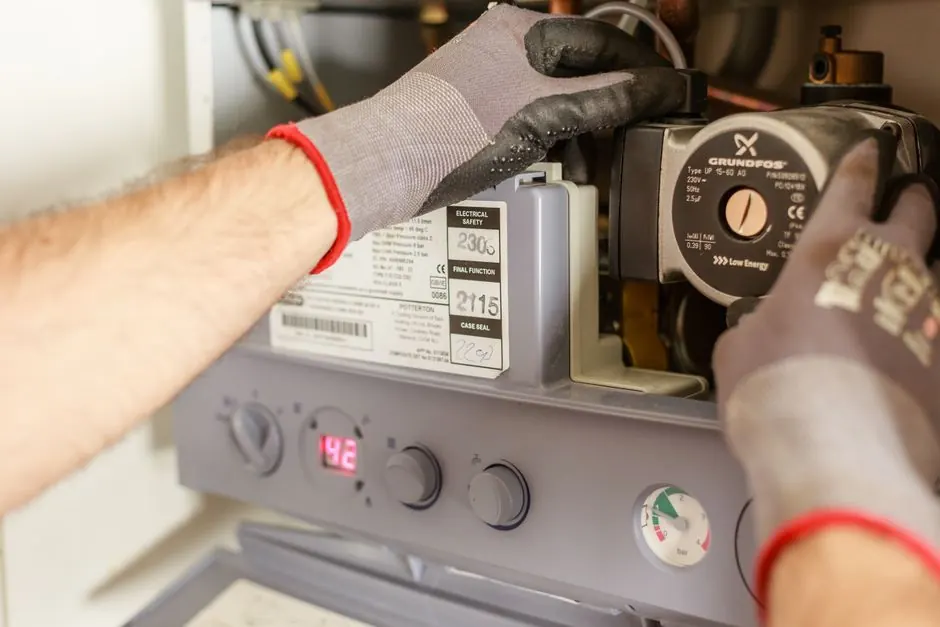
A technician starts by verifying the gauge with a second reading, because replacing parts on the word of a stuck gauge wastes everyone's time. Then the expansion tank gets checked: air charge measured with the system drained down, and the tank replaced if it is waterlogged or the charge will not hold. The fill valve comes next: cleaned, rebuilt, or replaced if it feeds past its setting. The relief valve gets tested too, since one that has opened repeatedly may weep even after pressure is fixed.
Finally, the tech runs a full cycle and watches the gauge climb and settle. Pressure should rise modestly and hold steady once the loop is up to temperature. Radiators get bled if air is trapped, and the system gets checked for slow leaks that keep the fill valve working overtime. Regular checks catch a tired tank or sticky fill valve before either pushes the relief valve open, which is the point of an annual boiler safety inspection and a gas boiler service visit on schedule.
Read the gauge, tap the tank, watch the relief pipe, and call before the warning becomes a flood.
Related guide: Why Is My Boiler Losing Pressure?
Pressure climbing past 30, or the relief valve dripping?
Call (973) 275-8278 and tell us what the gauge reads cold and hot. If the relief valve is discharging steadily, shut the burner off first and call from a cool, dry spot.
Call (973) 275-8278