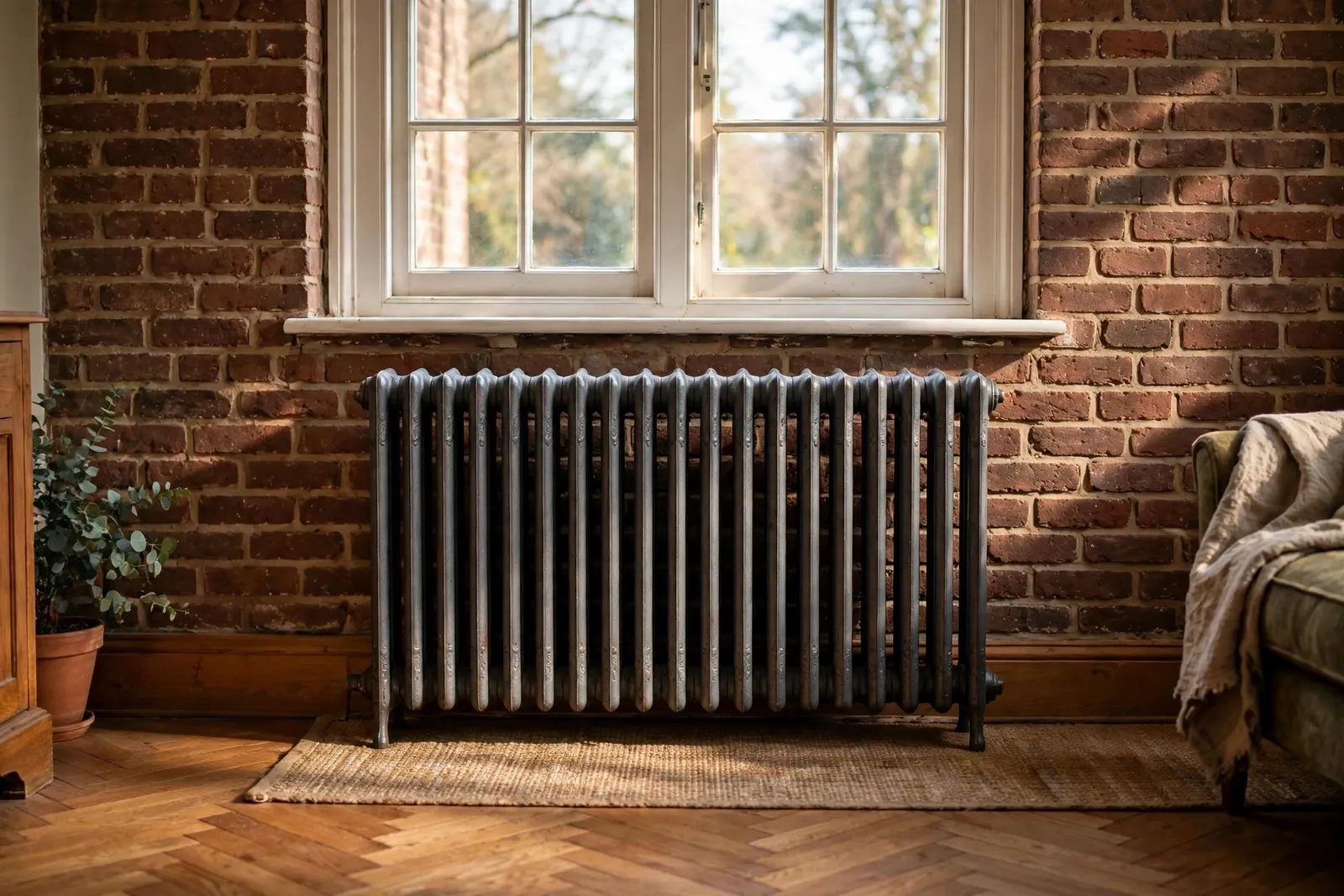
It is the first real cold snap of November in Forest Hill, and one radiator in the front bedroom is stone cold while the rest of the house is warm. The boiler is running. The thermostat is calling for heat. But that one radiator just sits there, doing nothing. If you live in a Newark brownstone, you have probably met this radiator. The fix is usually a ten-minute job with a small key.
The culprit is almost always trapped air. Air gets into a hot water heating system during repairs, after the system is drained, or slowly over years through tiny leaks and top-ups. Air rises to the highest point it can reach, often the top-floor radiator, where it sits like a plug, blocking hot water. Bleeding the radiator lets that air out. Here is how to do it right, and how to tell when the cold radiator means something else.
First, Figure Out Which System You Have
Newark brownstones run two very different kinds of heat, and bleeding only works on one of them. A hot water system circulates heated water through the radiators, and each radiator has a small bleed valve, usually at one end near the top. A steam system sends steam up through the pipes instead, and steam radiators have an air vent, not a bleed valve. That little vent hisses as air escapes.
How do you tell? Look at the pipes. A hot water radiator usually has two pipes, one in and one out, and a small square-keyed valve near the top. A steam radiator usually has a single pipe and a small bullet-shaped vent on the side that hisses and spits a little water when the heat comes on. If you are not sure, check our guide on steam vs hot water boilers, which explains how to identify what is in your Newark home. Everything below is for hot water radiators. If you have steam, skip the bleeding and read the section on when bleeding does not fix it.
Signs a Radiator Needs Bleeding
A radiator full of trapped air gives itself away. The top is cold while the bottom is warm, or the whole radiator is cold while the pipe leading into it is hot. Sometimes you hear gurgling, like water running through a half-empty pipe, when the heat cycles on. That sound is air moving around inside.
The pattern is the clue. One cold radiator in a house where the rest are warm points at air in that radiator. Every radiator cold points at the boiler, the circulator, or the thermostat, and no amount of bleeding will fix that. If only the top floor is cold, air is the prime suspect, because air rises. Our guide on why radiators go cold at the bottom covers the other common cause, sludge settling in the lower half, which feels similar but needs a different fix.
What You Need Before You Start
The kit is small. A radiator bleed key, from any hardware store in the Ironbound or downtown, and fits the square spindle on the bleed valve. Some newer valves take a flathead screwdriver instead, so check the valve before you buy. You also want an old towel or rag, a small container like a yogurt tub, and a pair of gloves, because the water that comes out can be hot and dirty.
Before you start, check the boiler pressure gauge. It should read somewhere in the normal range your system runs at, and if it is low, the system may need topping up first. Bleeding a radiator drops the pressure a little, so you want to start from a healthy reading. A boiler maintenance visit can sort out pressure issues at the same time as a full system check.
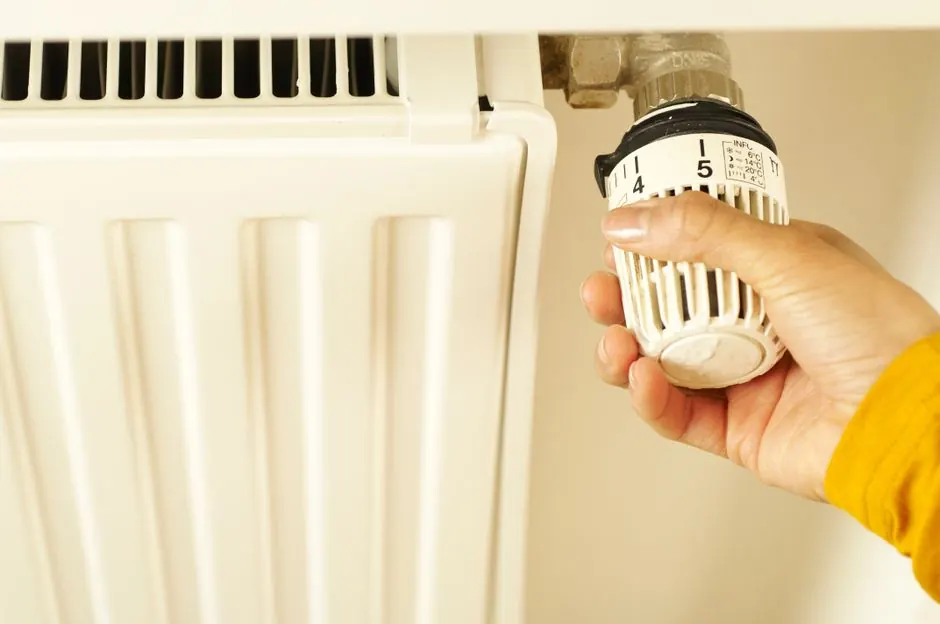
Bleeding a Radiator Step by Step
Step 1: Turn the heat off. Shut the thermostat down and let the radiators cool for half an hour. Hot water under pressure sprays further than you expect, and a cool system is a safe system. This is the step people skip, and the one that causes the burns.
Step 2: Find the bleed valve. It sits at one end of the radiator, near the top, a small valve with a square spindle. On old cast iron radiators it is sometimes painted over, so scrape the paint off gently and the key will seat properly. A key that slips will round off the spindle, and then you have a real problem.
Step 3: Hold the container under the valve and turn the key slowly. A quarter turn is enough. You will hear a hiss as the air escapes. Keep the key in place and wait. The hiss is the air leaving, and it can last a few seconds or a full minute on a radiator that has not been bled in years.
Step 4: Wait for a steady stream of water. When the hiss stops and water comes out in a steady stream, with no sputtering, the air is gone. Close the valve snugly. Do not overtighten it. A quarter turn back is all it needs, and cranking it will damage the seal.
Step 5: Wipe up and move to the next radiator. Start with the radiator furthest from the boiler on the lowest floor and work your way up and toward the boiler. In a three-story brownstone, that usually means the ground floor first, then the second, then the top. Bleed every radiator that is cold or gurgling, not just the worst one.
Step 6: Check the pressure and turn the heat back on. Look at the boiler gauge. If it has dropped, top the system up following the boiler's instructions. Then turn the thermostat back up and give the radiators twenty minutes. The ones you bled should warm up evenly, top to bottom.
What to Do After You Bleed
Check the pressure gauge once the system is hot again. Bleeding drops pressure, and a system that runs low will not circulate properly, which brings the cold radiators right back. If the gauge sits low, the system needs water added. Topping up every few weeks means there may be a slow leak, and that is worth a proper look.
Keep an eye on the radiators for a few days. A radiator that warms up and stays warm is fixed. One that goes cold again within days is telling you air is still getting in, through a leak, a faulty automatic air vent, or a system that keeps drawing in air at the fill point. Note which radiator it is and how fast it goes cold. And if the whole exercise has you thinking about the heating season ahead, our fall boiler maintenance checklist for Newark homeowners is a good next read.
When Bleeding Does Not Fix It
Bleeding fixes trapped air, and only trapped air. If the radiator stays cold after a proper bleed, the problem is somewhere else. Sludge is the usual suspect in older Newark systems. Rust and sediment settle in the bottom of radiators and in the pipes, blocking flow. A radiator hot at the top and cold at the bottom often has sludge, and that needs a power flush, not a bleed key.
A stuck valve is another one. The thermostatic valve or lockshield valve on the radiator can seize shut after a summer of sitting idle, especially on radiators in guest rooms that stay off for months. A valve that will not turn, or a radiator that stays cold even though the pipe into it is hot, points here. Our radiator repair and installation page covers valve replacement and balancing.
Then there is the boiler itself. If several radiators are cold, the circulator pump may have failed, or the system pressure may be too low to push water to the top floor of a three-story brownstone. Pressure that keeps falling means a leak, and a leak means a call. If you see water under the boiler or the pressure gauge drops to nothing overnight, stop and get help. Our guide on why your boiler is losing pressure explains what to check first.
And if you have a steam system, remember: there is no bleed valve to turn. A steam radiator that stays cold usually has a failed air vent, a radiator pitched the wrong way so condensate cannot drain, or a main vent problem. If your brownstone runs on steam and a radiator has gone cold, that is a job for someone who works on steam every day.
A cold radiator on the first cold night of the year tells you exactly where to look. Bleed it, watch it, and if it does not stay warm, the problem is deeper than air. That is when it is time to bring in help rather than keep turning the key.
Related guide: Why Are Radiators Cold at the Bottom?
Radiator still cold after bleeding?
Call (973) 275-8278 and tell us which radiators are cold and what you have tried.
Call (973) 275-8278