You head down to the basement for the laundry, and something stops you halfway down the stairs. The floor is wet near the boiler. Not soaked, just a dark patch spreading across the concrete, with a thin shine of water under the pipes. You need to know whether this can wait until morning.
Most boiler leaks start small, and most have a plain explanation: a relief valve doing its job, a fitting that has finally rusted through after forty winters, or a pump seal that has given up. A few are emergencies. What you see in the first five minutes tells you which one you have.
First, Look Before You Touch Anything
Before you reach for a wrench, or a towel, take a look. Is the water still spreading? Is it dripping from a pipe overhead, seeping from a joint, or welling up from under the boiler itself? A puddle that grows while you watch is a different problem from a damp patch that has sat there since last winter.
Keep your hands off anything hot. Boiler water scalds, and steam is worse, because you cannot always see where it is coming from. If water is pooling near the burner, the controls, or any wiring, do not touch the boiler. Flip the red emergency switch at the top of the basement stairs if you can reach it safely, and stay out of standing water while you do it. Then photograph the puddle and the pressure gauge. You will forget the gauge reading by the time you call.
The Pressure Relief Valve and Why It Opens
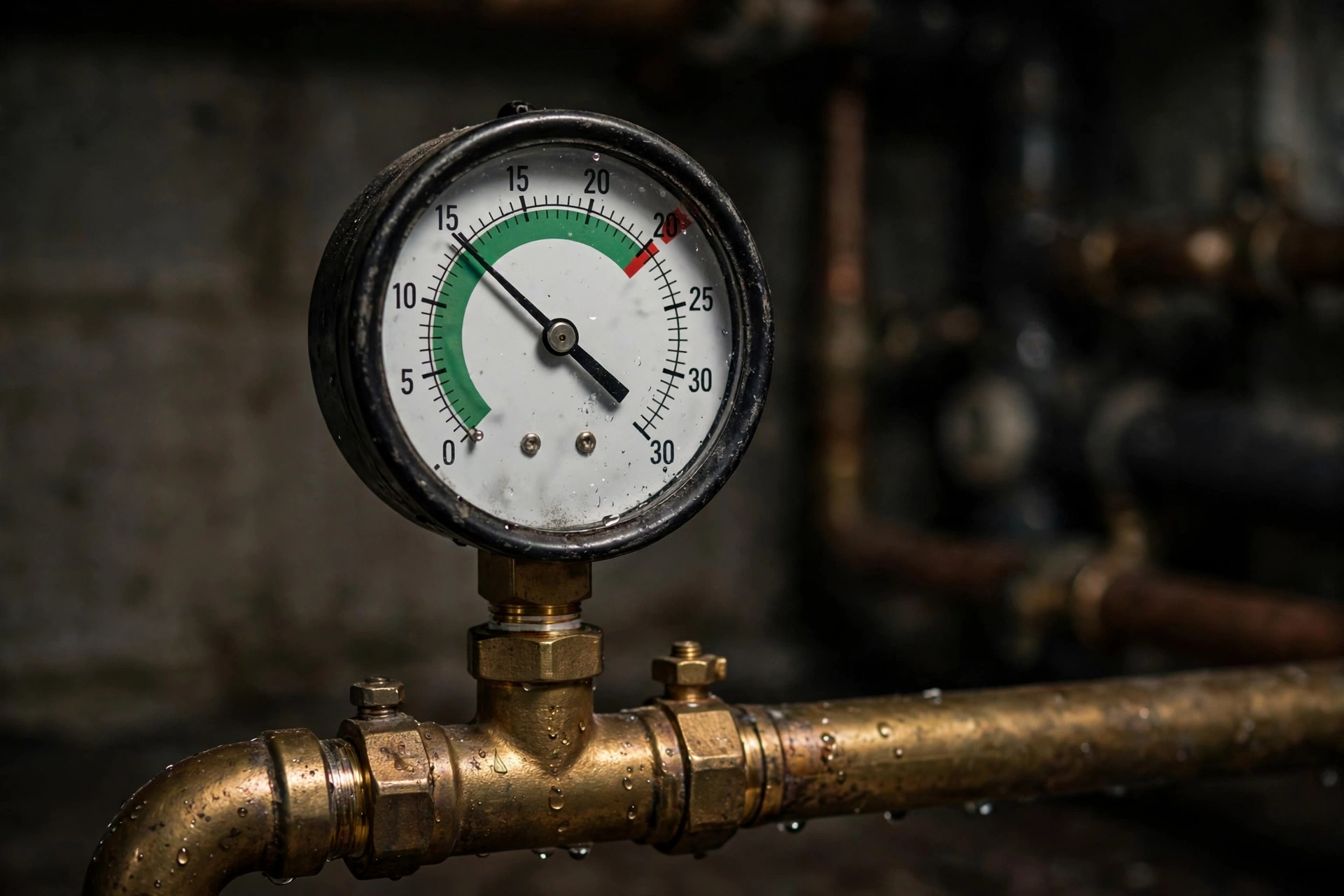
The pressure relief valve sits on top of or beside your boiler, with a discharge pipe running down toward the floor drain. Its one job is to open and let water out if the pressure climbs too high. When you find water under that pipe, the valve has either done its job, or it is worn out and weeping at normal pressure. Check the gauge before you blame the valve. A cold hot water system usually sits in the range of 12 to 20 psi, and if the needle is up near 30, pressure is the problem. High pressure usually starts elsewhere, like a fill valve stuck open or a waterlogged expansion tank.
Never cap the discharge pipe or tie the lever shut. The valve stands between high pressure and a ruptured boiler. A valve that opened once and stopped may only need watching for a day. A valve that keeps dumping water needs a technician the same day, and our boiler leak and pipe repair page explains how the source gets traced and fixed.
Corroded Fittings and Old Near-Boiler Piping
Newark basements hide a lot of old iron. The three-families in the Ironbound, the brick rowhouses in North Newark, and the big houses in Forest Hill often run on piping installed decades ago and patched over the years. Water finds the weakest joint first, usually a threaded fitting that has been rusting from the inside out. Look for rust streaks running down from a joint, green or white crust on copper fittings, and damp spots on the pipe insulation.
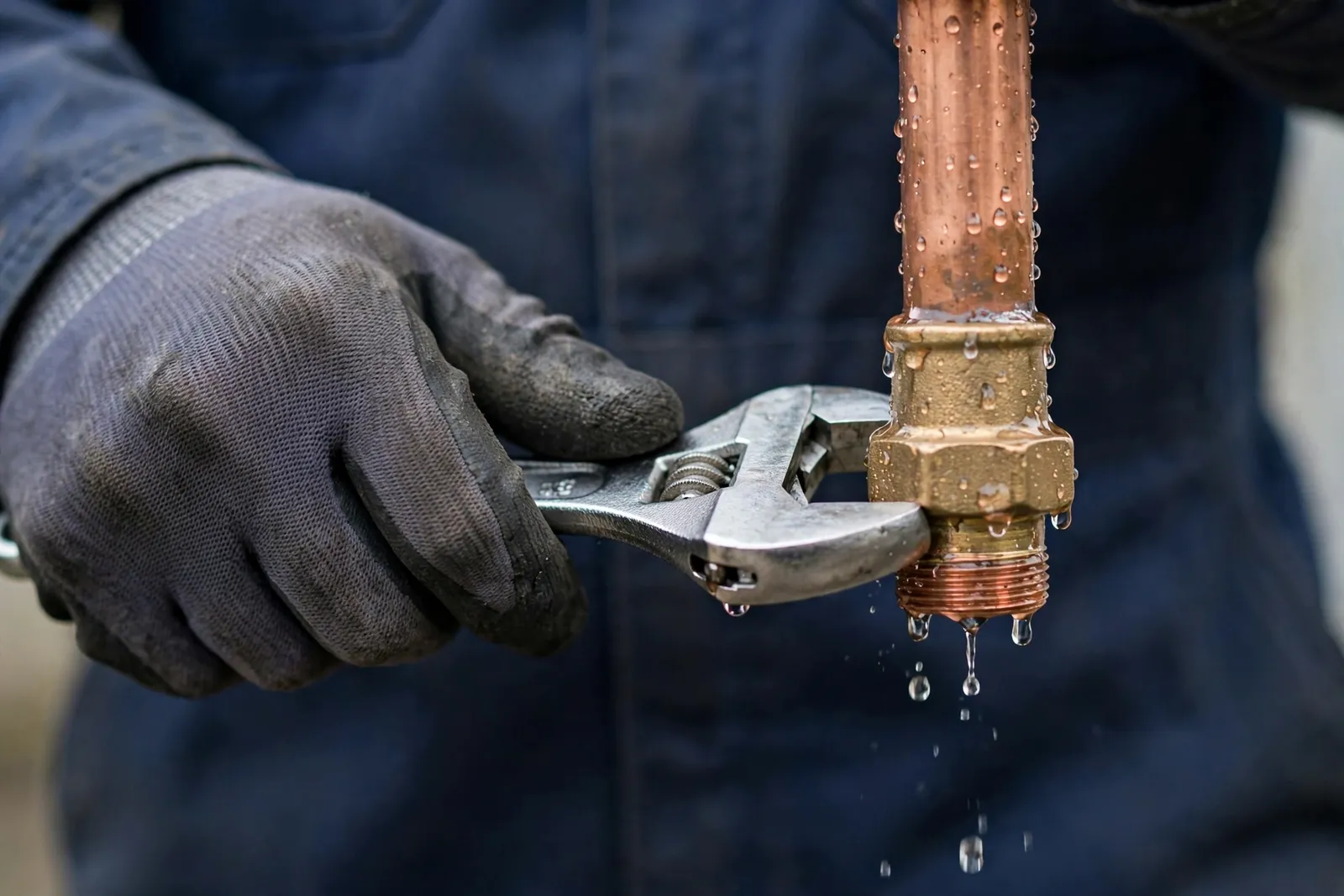
A fitting that weeps only when hot has opened up as the metal expanded, and it will not heal itself. Do not tighten a hot fitting or crank on a rusted union. Threads snap without warning, and a drip becomes a spray across the basement. Note where the water comes from, put a pan under it, and leave the wrench in the drawer. If your boiler keeps losing pressure along with the leak, our guide to why your boiler loses pressure covers how the two problems connect.
Pump Seals, Gaskets, and Valve Packing
Not every leak comes from a pipe. On a hot water system, the circulator pump has a seal around its shaft, and that seal wears out, leaving a slow drip under the pump and a rust stain on the floor below. Air vents can spit water when they fail, zone valves can weep from their packing, and radiator valves upstairs can drip through to the ceiling below, which is a job for radiator repair. Steam systems have their own versions: air vents that spit when they clog, and sight glass fittings that weep. In older Weequahic and Vailsburg houses, a spitting vent often points to a water level problem, and our steam boiler repair page covers how those systems get checked.
A Cracked Section or a Leaking Boiler Block
This is the one nobody wants. If water pools under the middle of the boiler, with no pipe or fitting above it, the boiler block itself may be leaking. Look for water inside the jacket and rust flakes on the burner. Old cast iron sections can crack from thermal shock or from age, and a cracked section does not seal itself. Do not keep feeding water to a boiler that keeps losing it, because every gallon of fresh water brings in oxygen and minerals that speed up rust and scale. When a block is cracked, the honest conversation is usually about boiler replacement, and it is better had in November than on the coldest night of January.
Water That Looks Like a Leak but Is Not One
Before you blame the boiler, check whether the water is even coming from it. Condensing boilers make condensate as they run, and if the small drain line clogs or freezes on a cold snap, water backs up and pools around the boiler, looking exactly like a leak. Our post on frozen condensate pipes explains what that looks like. Cold water pipes sweat in a humid basement, and a water heater, laundry drain, or foundation seepage after heavy rain can all wet the same stretch of concrete. Boiler water is usually dark and smells metallic, condensate is clear, and a puddle that only appears after heavy rain points at the foundation.
What Is Safe to Check Yourself
These checks are safe for a homeowner. Work through them in order, and stop the moment anything looks wrong.
- Read the pressure gauge. A reading near 30 psi means overpressure, and a falling reading means water is leaving somewhere.
- Check the relief valve pipe. A wet pipe end tells you the valve has opened or is weeping.
- Trace the water uphill. The highest wet fitting is usually the source.
- Check the sight glass on a steam boiler. If the glass is empty and the boiler is hot, shut it down and call. Do not add cold water to a hot, dry boiler.
- Check the radiators upstairs. Look under each valve and air vent for drips, stains, or damp floorboards.
- Put a pan under the drip. Closing the water feed valve, if you can reach it safely, stops fresh water from feeding the leak.
Do not open the boiler jacket, loosen any fitting, drain the system, or keep resetting a boiler that has locked out. A lockout is the boiler protecting itself.
When a Leak Is an Emergency
Some leaks can wait for a scheduled visit. These cannot. Call for help right away if water is spreading faster than you can mop it, if water is reaching the burner, the controls, or any wiring, if steam is blowing out of a pipe or fitting, if the boiler has lost its water level and has no heat. If you smell gas, leave the house and call from outside.
A boiler that is off on a freezing night leaves pipes in exterior walls at risk, and a shutdown over a small leak can turn into frozen pipes by morning. If you are in the Ironbound or Forest Hill and the leak has taken your heat with it, our emergency boiler repair page explains what to do next.
What a Technician Does Differently
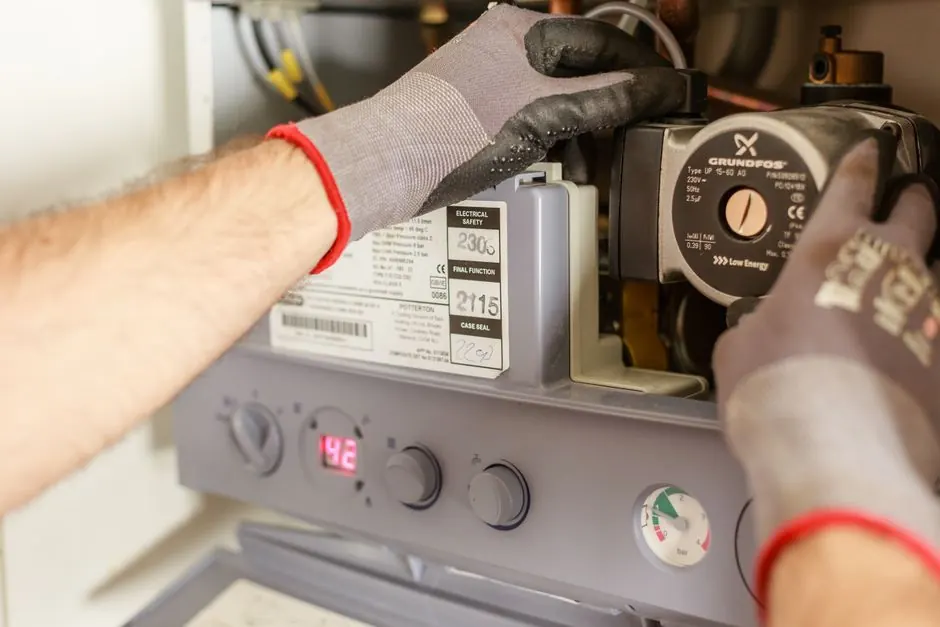
A technician does not guess at a leak, they isolate it. The system gets pressure tested section by section, the expansion tank and fill valve get checked, and the relief valve gets tested against a gauge instead of by eye. Water runs along pipes and drips far from its source, so the goal is the real source, not the puddle. A tune-up visit catches most of these problems before they fail: a weeping fitting, a weak relief valve, and a waterlogged expansion tank all show up on a fall check, while the fix is still small.
A puddle under the boiler is your heating system asking for attention while the fix is still small. Look first, keep your hands off anything hot, read the gauge, and get it looked at soon. The leak that gets fixed in November is a story you forget by Christmas. The one that gets ignored is the one that floods the basement in January.
Related guide: Why Is My Boiler Losing Pressure? Causes and Fixes
Boiler leaking in Newark?
Call (973) 275-8278 and tell us where the water is coming from and what the pressure gauge reads.
Call (973) 275-8278