It is 3 a.m. in the middle of a January cold snap and your radiators are going cold. You pad downstairs and find the boiler showing a fault code, maybe something about condensate or flow. The heat was fine yesterday. What changed overnight is the weather, not your boiler.
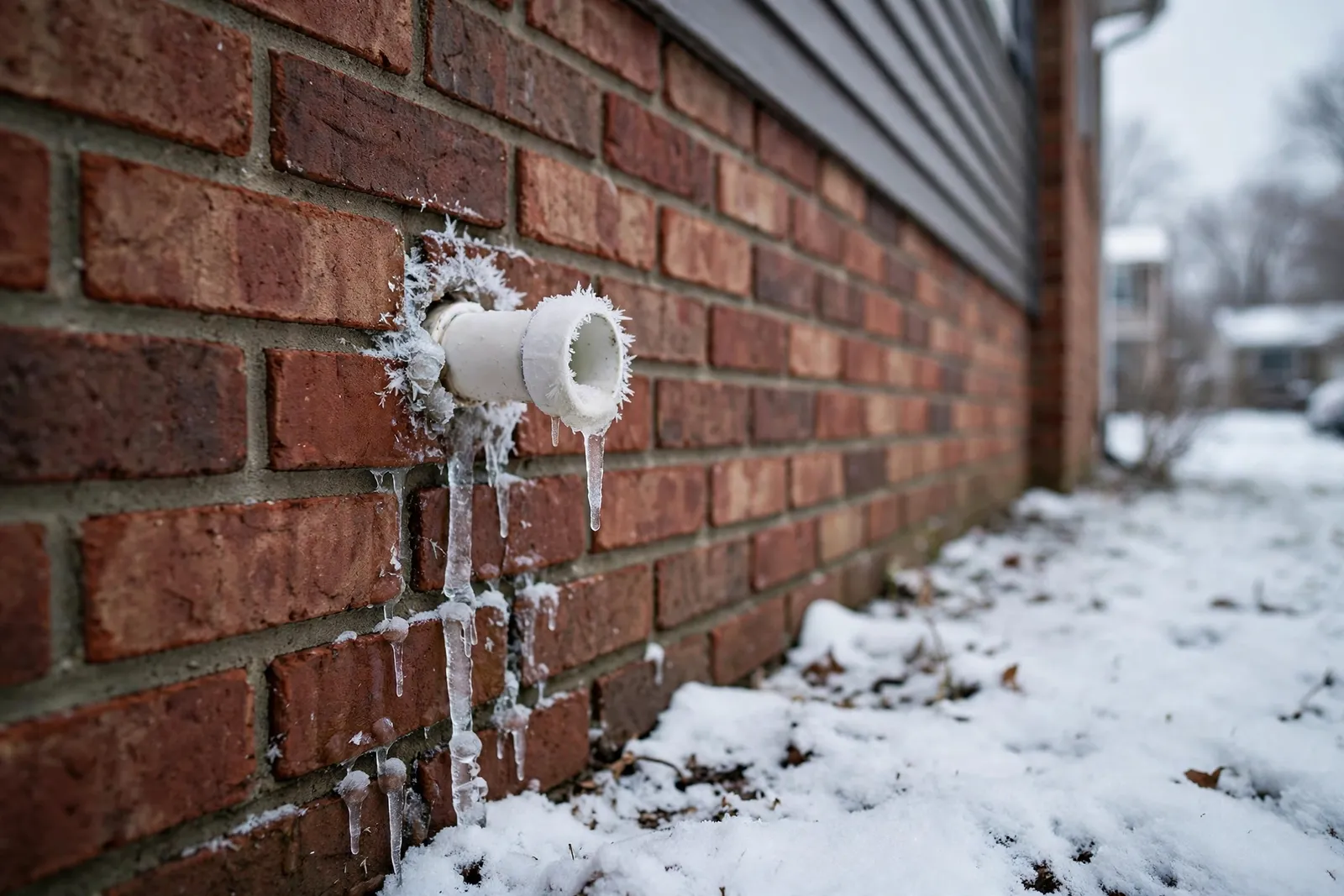
The likely culprit is the small plastic pipe that carries water away from your condensing boiler. It froze solid outside, the water backed up, and the boiler's safety switch shut the unit down. This is one of the most common no-heat calls we get in Newark after a stretch of teens and single digits, and most of the time you can start the fix yourself.
Why Condensing Boilers Produce Water
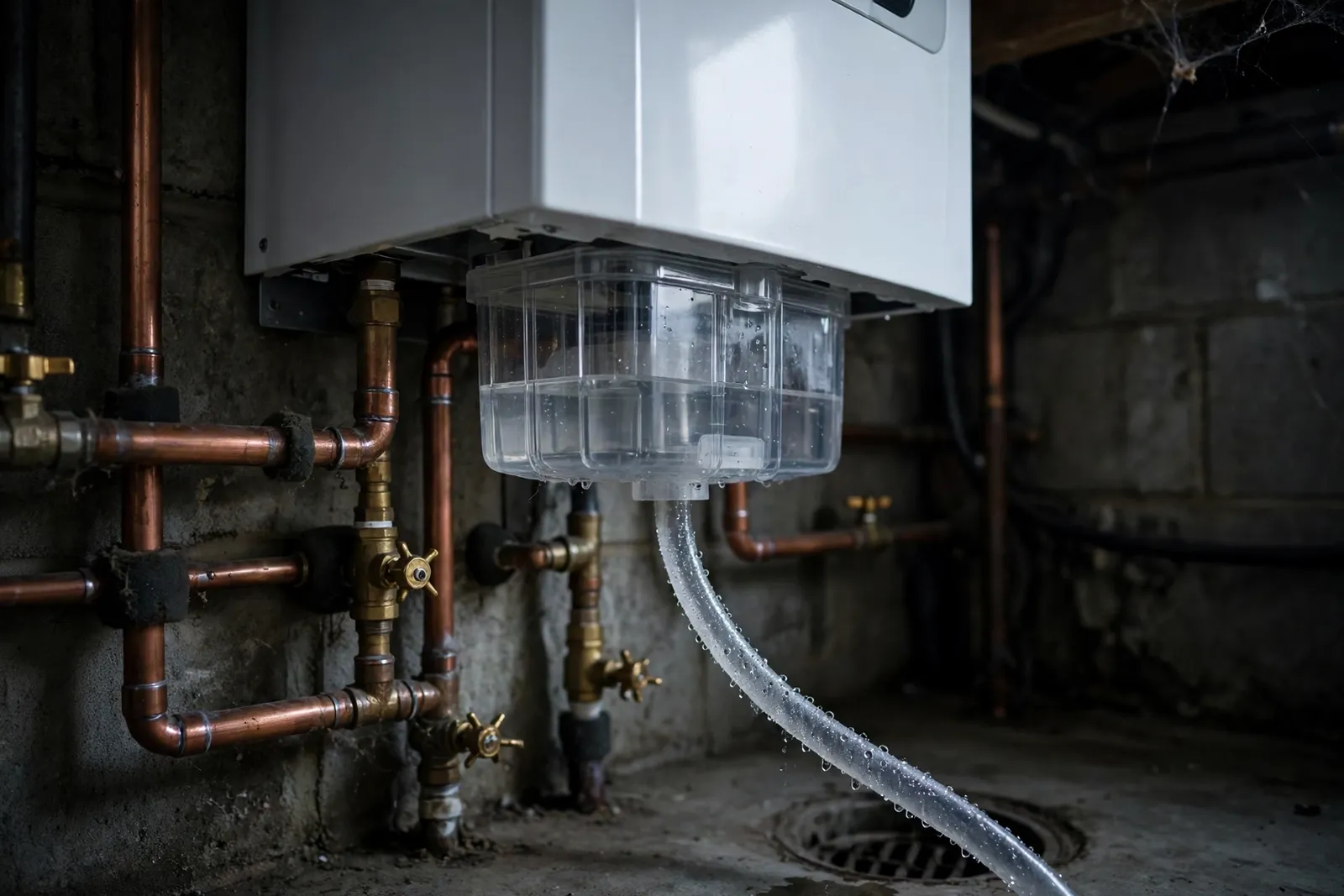
A condensing boiler squeezes extra heat out of the exhaust gases before they leave the flue. That is what makes it efficient, and it produces water as a byproduct: mildly acidic drips of condensate. Inside the unit, a trap collects the water and sends it down a plastic pipe, usually 3/4 inch, to an outdoor termination or an indoor drain.
As long as the line stays open, you never notice it. The boiler drips a steady trickle on cold days and the water runs off. The trouble starts when any part of that line sits exposed to freezing air.
How a Cold Snap Freezes the Drain Line
Newark gets plenty of January and February nights in the teens and single digits. Condensate drips slowly, so a thin line freezes layer by layer rather than bursting. The setups that freeze first are the ones with a long outdoor run, a flat or slightly uphill pitch, or a termination on a north-facing wall that never sees sun.
We see this a lot in Ironbound and Vailsburg houses where an old cast-iron or steam boiler was swapped for a wall-hung condensing unit during a renovation. The installer ran the condensate out through the nearest wall and called it a day. It drains fine all fall. Then the first real cold snap arrives and the line turns into a popsicle. If your boiler was installed in the last decade and only faults on the coldest nights, the condensate routing is suspect number one.
Warning Signs of a Frozen Condensate Line
Gurgling or bubbling sounds from the boiler cabinet come first. That is water struggling past a shrinking opening. Then the display throws a fault code mentioning condensate, flow, or blocked flue. The boiler may fire, run a few minutes, and shut down again.
Other tells: water dripping from under the boiler cabinet, or the outdoor pipe outlet sitting bone dry while the boiler is running. Step outside and look at the end of the pipe. Ice ringing the mouth, or a stub buried in a snowdrift, is all the evidence you need.
A boiler that locks out on this is doing its job. The shutdown keeps the heat exchanger from flooding. Treat the fault code as information, not as the enemy.
What to Do When Your Boiler Shuts Down
Start by photographing the fault code on the display. That code will help a technician enormously if one ends up coming. Then walk around to the outdoor termination, usually a small white or gray plastic pipe on a side or back wall, often near the boiler's flue.
Thaw it with warm, not boiling, water poured over the pipe, or hold a warm damp cloth against it. Never use a torch or heat gun on a plastic condensate line, and do not chip at ice with anything sharp enough to crack the pipe. Check that water starts dripping freely from the end and that the mouth is clear of ice and snow.
Reset the boiler once. If it fires and stays on, you are back in business. Our Emergency Boiler Repair in Newark page covers what to do when heat is out and a reset does not fix it. One reset is diagnosis. Five in a row is flooding the unit.
How to Keep the Pipe From Freezing Again
Thawing solves tonight. Prevention solves the winter:
- Insulate the outdoor run. Weatherproof pipe insulation on any exposed section raises the freeze threshold noticeably.
- Shorten the exposure. A pipe that terminates a foot from the wall freezes far less than one that runs six feet along it.
- Reroute indoors where possible. Sending the line to an indoor drain, like a laundry sink or floor drain, removes the weather from the equation entirely.
- Use a wider pipe outside. A larger diameter on the outdoor section gives draining water more room before ice closes the gap.
- Keep the outlet clear. Snow and shrubs pile against the termination and bury it. Leave it daylight.
This is exactly the kind of thing a fall tune-up catches before January does. Our Boiler Maintenance & Tune-Ups in Newark visit includes a look at condensate routing, so an exposed line gets flagged while there is still time to fix it.
When Ice Is Not the Only Problem
Sometimes you thaw the pipe and the boiler still faults. Then the trouble is inside: a clogged trap, a dead condensate pump if your system uses one, or a fault code pointing somewhere else entirely. A boiler that keeps tripping after thawing is telling you the ice was a symptom of a different blockage, or that the freeze damaged something.
Repeated lockouts that seem to clear on their own deserve attention too. Each trip wears on controls and seals. We chase this down across the city, and the pattern varies by block: our boiler repair in Forest Hill calls often involve retrofitted condensing units with optimistic outdoor routing, while older streets still run systems that never had a condensate line at all.
If your boiler shows a different problem after thawing, our guide on Why Is My Boiler Losing Pressure? covers the sealed-system side, and Why Is My Boiler Making Banging Noises? covers the noisy-system side. When none of it adds up, stop guessing and call.