You walk into the basement and catch it right away: a sharp, rotten egg smell hanging around the boiler. Maybe it is faint, the kind you notice and then talk yourself out of. Maybe it hits you at the top of the stairs. Either way, trust your nose. Natural gas has no smell of its own, so the utility adds a chemical called mercaptan that smells like rotten eggs, and it is there for exactly this moment.
A gas smell near a boiler is not a wait and see problem, and it is not a do it yourself repair. What you do in the first few minutes matters more than anything a technician does later. This blog covers the shutoff steps, how to ventilate without creating a spark, and whether the gas company or a boiler tech gets the first call.
First, Trust Your Nose and Act Fast
Not every gas smell is the same. A faint whiff that stays close to the boiler still needs checking, but a strong smell that fills a room, spreads to other floors, or comes with a hissing sound near a pipe or the meter is an emergency. Leave the house, and do not stop to investigate. Headaches, dizziness, or nausea alongside the smell are a further reason to get out fast and call 911 from outside.
Newark has a lot of old heating equipment: cast iron boilers in Ironbound two families and steam systems in Forest Hill homes that predate the Second World War. Old pipe and old valves can develop small leaks that a nose catches first. Do not waste that warning by airing the room out and hoping the smell stays away.
The First Five Minutes: What to Do Right Away
- Stop and do not touch anything electrical. Do not flip light switches, touch the thermostat, plug or unplug anything, or use a phone, a garage door opener, or any appliance inside the house.
- Get everyone out, including pets. Walk out and leave the front or back door open behind you. Do not go back for coats or keys.
- Call from outside. From a neighbor's home or your cell phone well away from the house, call your gas utility's emergency line. PSE&G serves most of Newark. If the smell is strong, you hear hissing, or anyone feels ill, call 911 and say you smell gas.
- Do not start a car in an attached garage. An engine and a garage door motor are both ignition sources. Leave the car where it is.
- Stay out until you are told it is safe. The gas company or the fire department will check the air with a detector and tell you when it is safe to go back in.
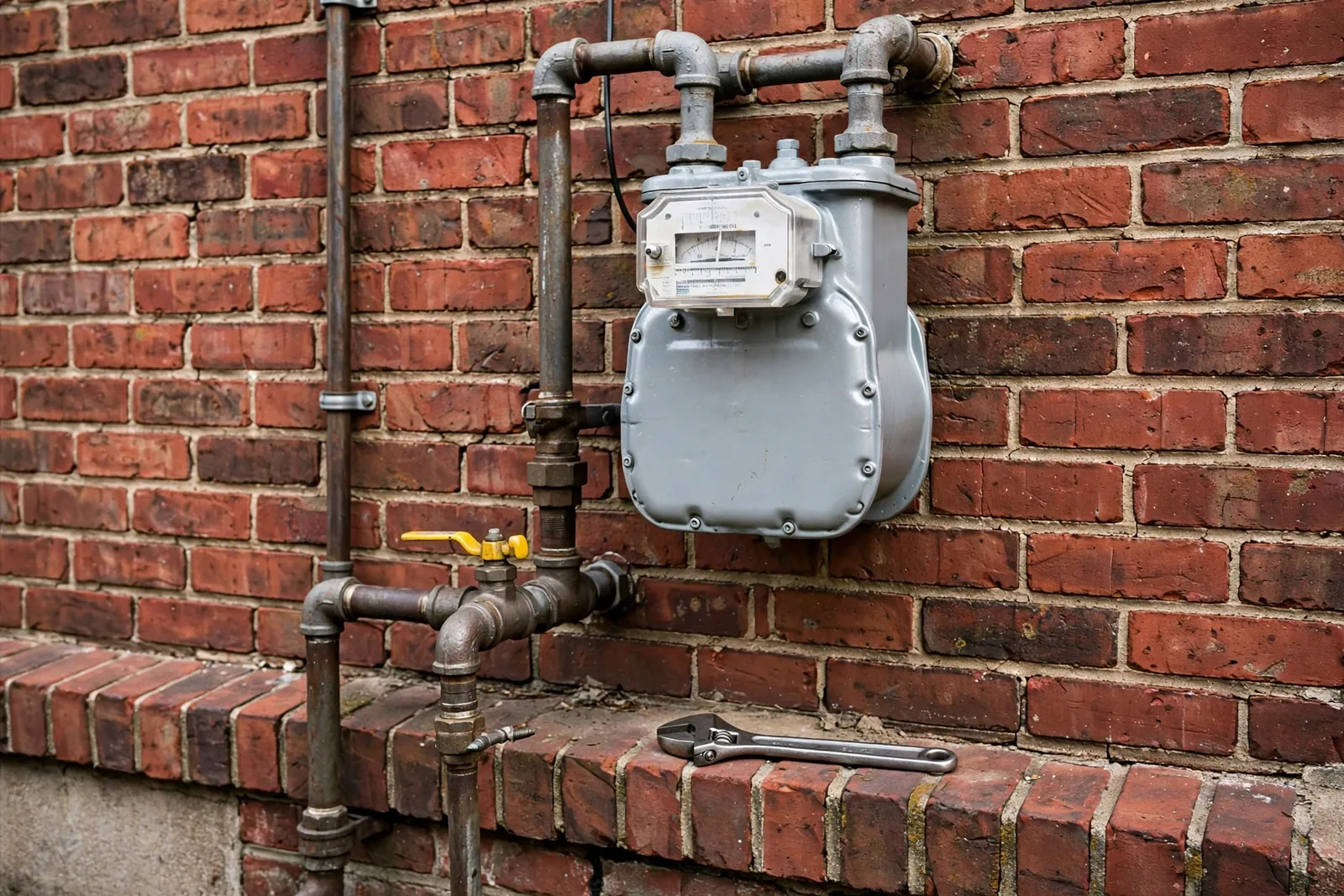
If the smell is faint and you can reach the gas meter from outside without walking back through the smell, you can shut the gas off at the meter: turn the valve a quarter turn so the handle sits across the pipe. Once it is off, leave it off. Only the gas company should turn it back on, because every appliance and pilot needs checking and relighting in the right order.
What Not to Touch
The instinct to fix things is strong when the boiler is right there and the smell seems small. Resist it. None of these belong in the first hour of a gas smell:
- Light switches, phones, and chargers used inside the house. Step outside first.
- The boiler itself. Do not adjust the gas valve, tighten a fitting, or relight a pilot while gas may be present.
- Matches, candles, and lighters. No open flame of any kind until the house has been cleared.
- Fans and the heating system. Do not run exhaust fans or turn the heat up or down. Motors can spark.
- Leak hunting with soapy water. That is a job for a technician with a detector, in a house that has already been checked.
Ventilation Without Creating a Spark
Fresh air dilutes gas, so ventilation helps, but only if it does not slow you down or create a spark. On your way out, leave the doors you pass through open. If a ground floor window opens with one easy motion, leave it open too. Then keep walking out. Do not go room to room opening windows or prop a fan in a doorway. Every extra minute inside is a minute breathing gas, and every switch or motor is a risk. Once the gas company has cleared the house, they will tell you how to air it out fully before anything gets relit. That is also when a gas boiler service visit makes sense: with the air confirmed safe, a tech can work through the boiler side properly.
When to Call the Gas Company First
The gas company owns everything up to and including the meter, and its crews carry the detectors and the authority to shut gas off at the street. Call the gas company first when the smell is strong or spreading, when you hear hissing, when the smell is near the meter or outside, when it started after digging, or when it comes back after the boiler has been shut down. In a multi-family building, tell the super or the other tenants on your way out.
When the crew arrives, they will sweep the house with a detector, check the meter and the service line, and either find the leak or clear the utility side. If they shut the gas off, do not argue for a quick restart. A shutoff after a smell report means something real was found, and the fix has to come first.
When a Boiler Tech Is the Right Call
Once the gas company has cleared the line up to the meter, or when the smell has been traced to the boiler itself and the air is confirmed safe, the next call is a boiler tech. Faults on the boiler side include a gas valve that does not close fully, a loose union or fitting at the burner, a pilot that keeps going out and lets gas flow unburned, and venting problems that push combustion fumes back into the room. These are repair jobs, not utility jobs.
Brick City Boiler handles emergency boiler repair across Newark, from the Ironbound to Forest Hill, and a gas smell report after the utility has cleared the meter is treated as urgent. If your boiler has a standing pilot, read why a Newark boiler pilot light keeps going out before anyone relights it.
What Causes a Gas Smell at a Boiler
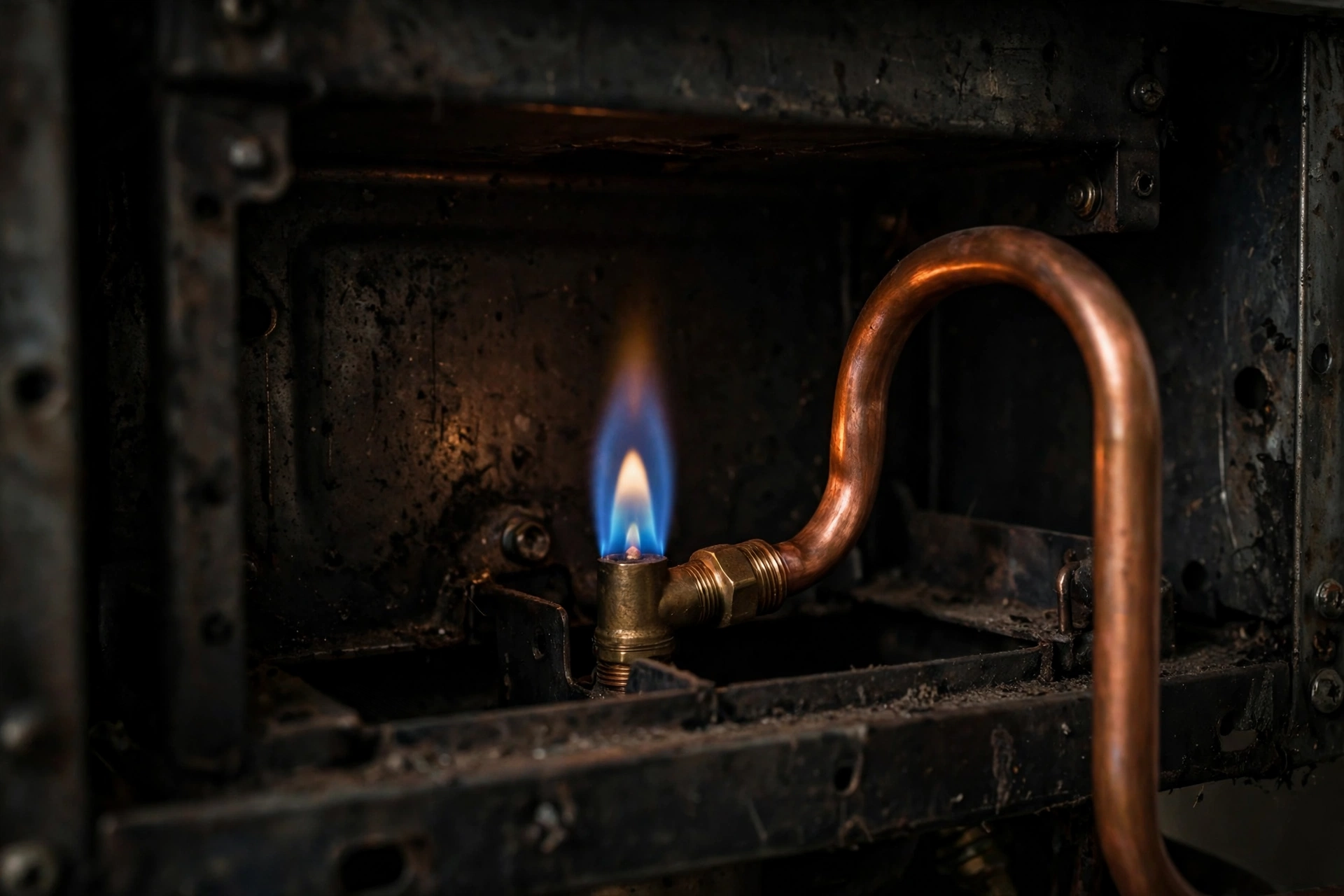
A gas smell at a boiler usually comes from a short list of causes, and a detector finds most of them in minutes. The gas valve can wear and weep. Unions and threaded joints in old near-boiler piping loosen as the system heats and cools, and the joint compound on a forty year old fitting dries out. A pilot assembly can fail to shut the gas off when the flame drops out.
There is also a smell that is not a gas leak at all: combustion fumes spilling back into the room because the flue is blocked or the chimney draft is weak on a windy day. That smells more like exhaust than rotten eggs, and it carries carbon monoxide, which has no smell at all. A working carbon monoxide alarm in the basement and near bedrooms is the backstop for that one. Water problems often travel with old piping too, so if you also see dampness around the boiler, read what to do when your Newark boiler leaks water and mention both symptoms when you call.
What a Technician Checks After the All Clear
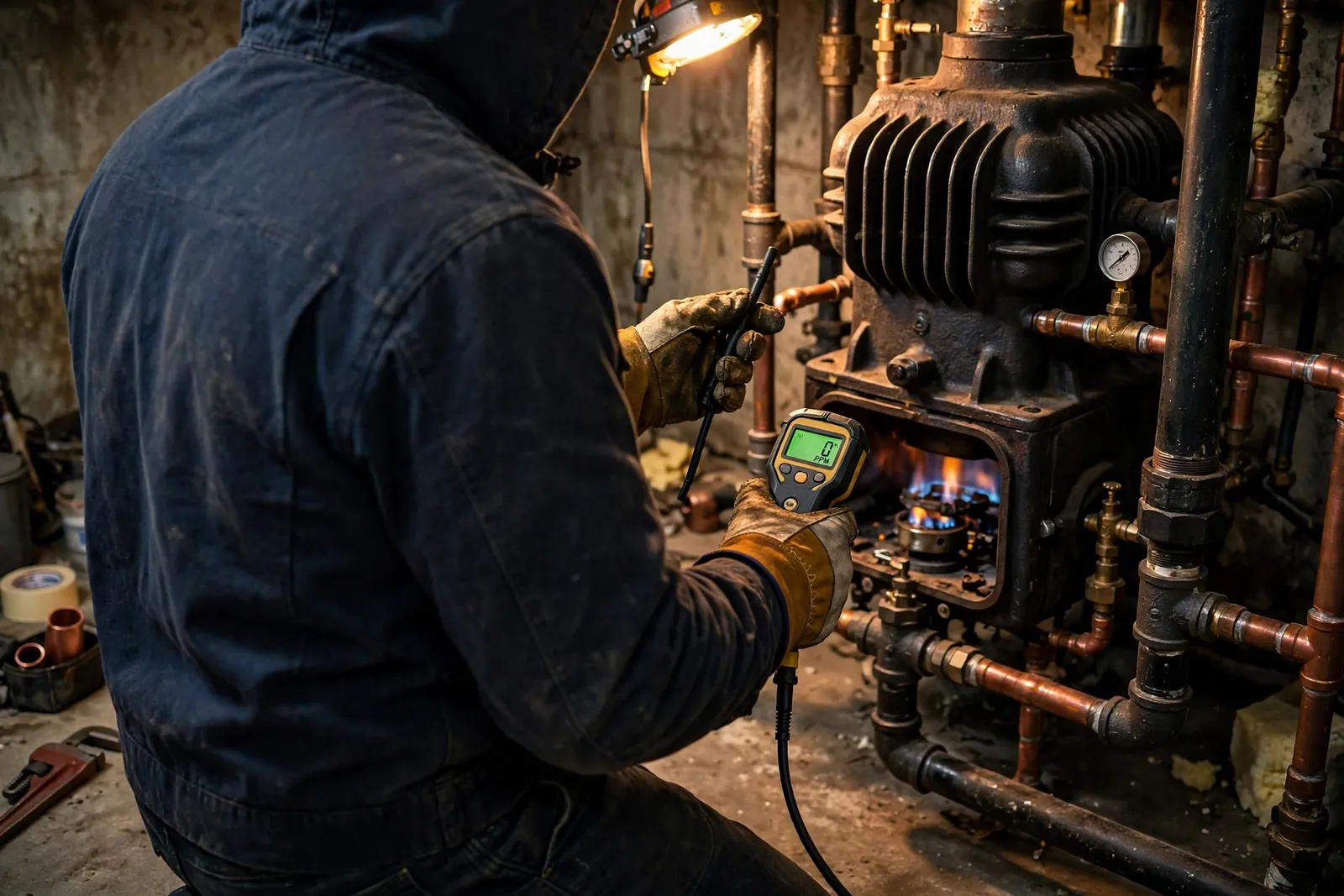
After the air has been cleared, a tech starts with a detector sweep: every joint, union, valve, and connector on the gas line to the boiler, with the boiler both off and running. Then the burner and pilot get a look: flame color and shape, pilot position, and whether the gas valve closes crisply when the flame is out. The flue and draft get checked too, because a boiler that leaks gas and a boiler that spills exhaust can share the same tired vent.
Finally, the tech relights and watches a full cycle: flame, ignition, and a recheck of the joints while warm. That last step is what turns a cleared house back into a heated one you can trust. Regular checks catch most of these faults before they smell at all, which is the point of an annual boiler safety inspection and routine boiler maintenance and tune ups.
A gas smell is your boiler asking for attention. Leave, call from outside, and let the right people find it.
Related guide: Newark Boiler Pilot Light Keeps Going Out: Fixes
Gas company cleared the line, smell points to the boiler?
Call (973) 275-8278 and tell us what the gas company found. If the smell is strong right now, leave first and call the gas company or 911 from outside.
Call (973) 275-8278